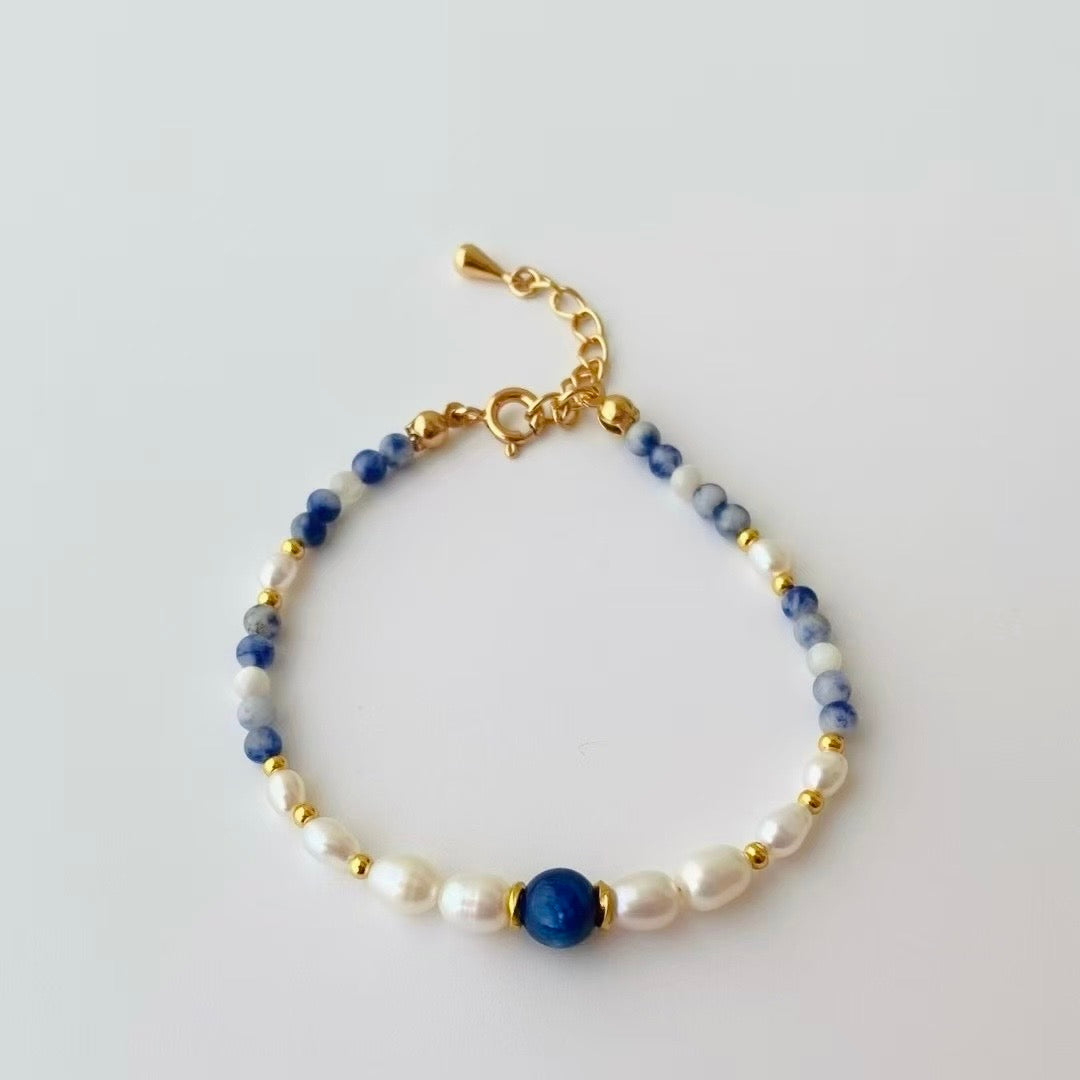
Prohibited Practices for Wearing and Maintaining Pearl Bracelets While Bathing
Pearl Bracelet Shower Mistakes: What to Avoid to Keep Them Beautiful
Most people put on their pearl bracelet in the morning and forget about it until bedtime. That includes shower time. And that single habit — wearing pearls in the shower — is probably the fastest way to ruin a bracelet you love. The damage isn't always visible right away, but over months and years, it adds up fast. Here's what actually happens when pearls meet soap, steam, and hot water, plus the specific things you should never do.
Why Showering With Pearls Is a Bad Idea
It's not just about getting the bracelet wet. There's a lot more going on inside your shower that pearls simply cannot handle.
Soap and Shampoo Are Pearl Killers
Every bar of soap, bottle of body wash, and shampoo you use contains chemicals designed to strip oil from skin. That same stripping action attacks the nacre — the thin, layered coating that gives pearls their shine. Once that surface gets stripped, pearls turn chalky, lose their luster, and start looking gray instead of white or cream.
Even "gentle" or "natural" soaps contain surfactants that break down organic materials. Pearls are organic. The math doesn't work in your favor.
Hot Water and Steam Weaken the Thread
Here's the part nobody talks about. Most pearl bracelets are strung on silk or nylon thread. Hot water softens silk. Steam loosens knots. Every time you shower with your bracelet on, you're slowly undoing the very thing holding your pearls together. You won't notice it until one morning the bracelet snaps and pearls scatter across the bathroom floor.
Chlorine and Hard Water Leave Permanent Marks
Tap water in most cities contains minerals like calcium and magnesium. When that water dries on a pearl, it leaves behind tiny white spots that are almost impossible to remove without polishing — and polishing removes nacre, which is even worse.
If you swim in a pool before or after showering, chlorine does the same thing but faster. It eats through the nacre surface and causes yellowing that no amount of wiping can fix.
The Biggest Shower-Related Mistakes Pearl Wearers Make
Most of these sound obvious, but people still do them every single day.
Washing Hands With the Bracelet On
This one surprises people. You're not even in the shower yet — just standing at the sink. But hand soap is just as damaging as body wash, and running water over pearls repeatedly weakens the drill holes where the thread passes through. Make it a rule: bracelet off before you touch any soap and water.
Spraying Perfume or Hairspray Near the Bracelet
A lot of people do their full beauty routine in the bathroom. Perfume contains alcohol, which dries out the nacre. Hairspray contains polymers that can stick to the pearl surface and turn it sticky or discolored. Always apply fragrance and hair products before you put on your bracelet — never after, and never while wearing it in a steamy bathroom.
Drying Pearls With a Towel
After a shower, the instinct is to grab a towel and dry everything off. But rough towel fabric scratches the nacre surface. Even a soft cotton towel can trap tiny fibers against the pearl, causing micro-scratches over time. If your pearls do get wet, pat them gently with a chamois cloth or a clean microfiber towel — no rubbing, no pressing hard.
How to Actually Shower Without Worrying About Your Pearls
You don't have to live in fear every time you step into the bathroom. You just need a simple routine.
The Two-Minute Pre-Shower Rule
Before you turn on the water, take off every piece of pearl jewelry. Place it on a soft cloth away from the sink, not on a hard countertop where it can roll or get knocked. Two minutes of effort saves you years of damage.
What to Do If Your Pearl Bracelet Accidentally Gets Wet
Don't panic. Don't shake it. Don't blow on it. Just lay it flat on a dry microfiber cloth and let it air dry naturally at room temperature. Never use a hairdryer — the heat can crack the nacre. Once dry, give each pearl a quick wipe with a barely damp cloth to remove any mineral residue from the water.
Weekly Maintenance That Makes a Real Difference
Once a week, wipe down your pearls with a soft, dry cloth after wearing them. This removes sweat, skin oils, and any trace chemicals that accumulated during the day. It takes less than a minute and prevents the buildup that leads to long-term dulling.
Every few months, do a deeper clean using a cloth dampened with distilled water and one drop of pH-neutral soap. Wipe each pearl individually, never soak the whole bracelet, and pat dry right away.
Special Situations That Deserve Extra Caution
Some scenarios are riskier than others, and knowing them can save your bracelet.
Swimming With Pearl Bracelets
Never do it. Pool water contains chlorine. Ocean water contains salt. Both are corrosive to nacre and thread. Even a quick dip can cause damage that shows up weeks later as peeling or discoloration.
Exercising or Sauna Sessions
Sweat is acidic. It eats away at nacre just like soap does, only slower. If you work out with your pearl bracelet on, wipe it down immediately afterward with a dry cloth. Saunas and steam rooms are even worse — the combination of heat and moisture destroys silk thread within weeks.
Cooking in the Kitchen
Grease, cooking spray, and even steam from boiling water can coat pearls and attract dirt. The oils from food can seep into the nacre and cause permanent yellow spots. Always remove your bracelet before you start cooking.
The Real Cost of Ignoring These Rules
Pearls don't scream when you damage them. They just slowly go dull. The shine fades a little each month. The color shifts a little each year. By the time you notice something is wrong, the nacre has already been compromised, and there's no way to fully restore it.
The good news is that avoiding all of this is genuinely easy. Take the bracelet off before water touches it. Wipe it dry after every wear. Keep it away from chemicals, heat, and rough surfaces. That's it. No special tools, no expensive treatments, no complicated routines.
Your pearls will look the way they looked the day you got them — as long as you treat the shower as a no-pearl zone.