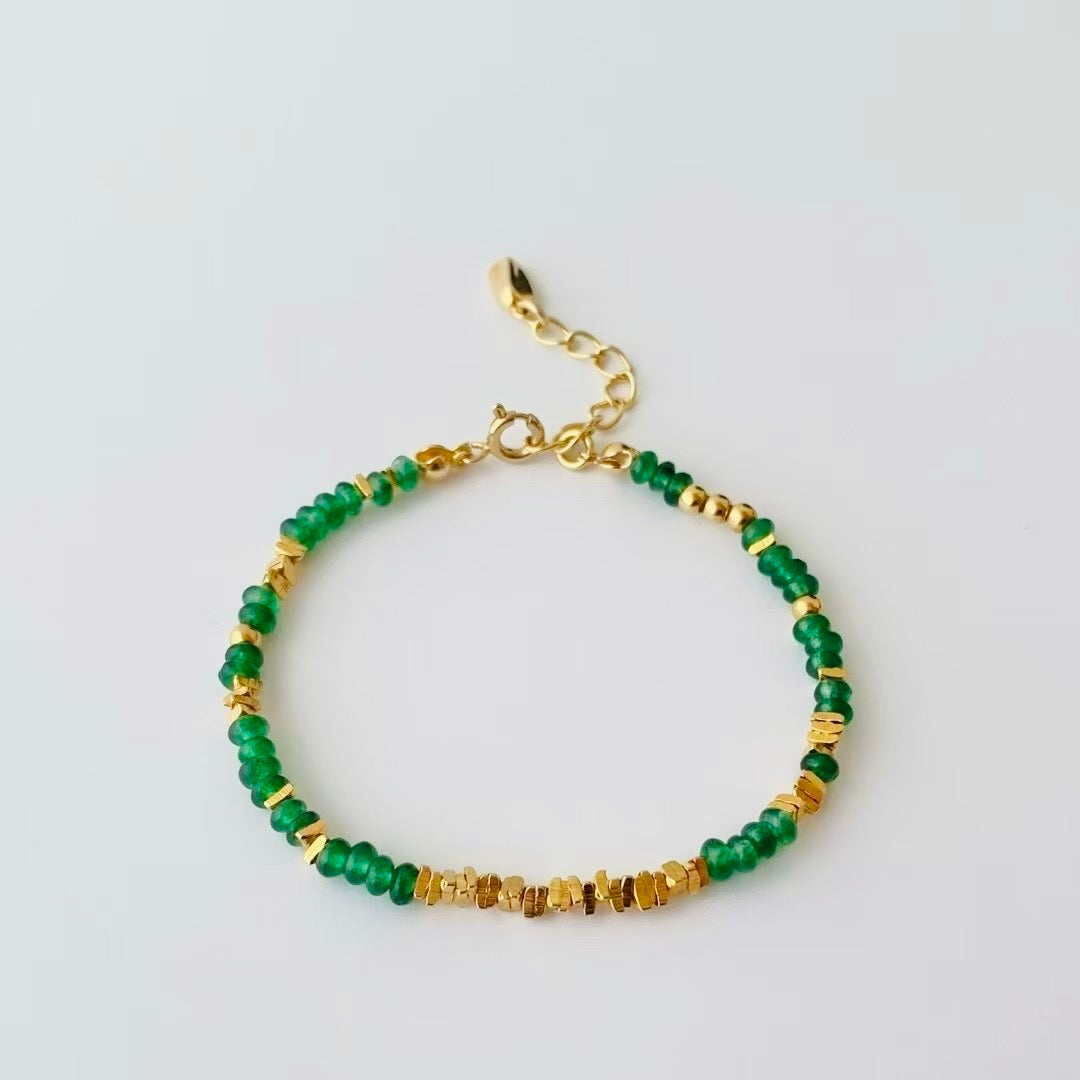

How to care for a pearl bracelet when it comes into contact with cosmetics?
Pearl Bracelet and Makeup: How to Protect Your Strand When Cosmetics Get Involved
If you wear your pearl bracelet daily, there's a good chance it's already tangled up with your makeup routine. Perfume spritz. Foundation smear. Sunscreen swipe. These things seem harmless in the moment, but they do real damage to pearls over time. The nacre surface absorbs chemicals faster than you'd expect, and once the damage sets in, wiping it off won't undo it. Here's how to handle the situation when your pearls and cosmetics collide.
What Actually Happens When Makeup Touches Pearls
It's not just a surface stain. Most cosmetics contain ingredients that chemically react with the nacre layer, and the damage goes deeper than what you can see.
Perfume and Alcohol-Based Sprays Eat the Luster
Perfume is one of the worst offenders. Most fragrances are alcohol-based, and alcohol dries out the nacre instantly. The pearl loses its moisture balance, and that iridescent glow starts to fade within weeks of repeated exposure. Heavy, oil-based perfumes are slightly better, but they still leave a residue that attracts dust and turns the pearl surface sticky over time.
The rule is simple: spray perfume first, let it dry completely, then put on your bracelet. Never the other way around.
Sunscreen and Moisturizer Leave a Film
Sunscreen contains zinc oxide and avobenzone, both of which react with calcium carbonate — the main component of nacre. When sunscreen dries on a pearl, it leaves a chalky, uneven film that dulls the shine and can cause yellowing. Moisturizers and face creams do something similar. The oils in these products seep into the nacre pores and trap dirt against the surface.
Even "waterproof" sunscreen is a problem. The polymers that make it waterproof also make it harder to remove from a pearl surface without scrubbing — and scrubbing is exactly what you should never do.
Foundation and Powder Cause Discoloration
Liquid foundation, pressed powder, and setting spray all contain pigments and binders that transfer onto pearls on contact. Light-colored pearls pick up pink and beige tones. Dark pearls can develop uneven patches. Once these pigments settle into the nacre, they're nearly impossible to remove without professional polishing, which thins the nacre further.
Immediate Steps When Your Bracelet Gets Exposed to Cosmetics
Don't wait until the end of the day. The faster you act, the less damage sticks.
Wipe Within the First Minute
Grab a soft, dry microfiber cloth and gently wipe each pearl the moment you notice makeup contact. Don't press hard. Just light, single-direction strokes along the string. This removes most of the product before it has time to absorb into the nacre.
If the makeup is oily — like foundation or moisturizer — use a cloth barely dampened with distilled water. One pearl at a time. Never dunk the whole bracelet.
Don't Use Your Fingers to Clean
It's tempting. But your fingers transfer oils and bacteria onto the pearl surface while you're trying to clean it. You end up adding more contamination than you're removing. Stick to a clean cloth every single time.
Long-Term Care Routine for Makeup-Exposed Pearls
If your bracelet lives near your vanity, it needs a weekly routine that goes beyond a quick wipe.
The Weekly Distilled Water Wipe-Down
Once a week, take five minutes to properly clean your bracelet. Use a fresh microfiber cloth dampened with distilled water only — no soap, no cleaning solution. Wipe each pearl individually, pay attention to the areas near the clasp where product tends to build up, and pat dry with a second dry cloth immediately.
This removes accumulated chemical residue that daily wiping misses. It also lets you catch early signs of dulling or discoloration before they become permanent.
Monthly Deep Clean for Heavy Makeup Users
If you wear heavy makeup daily, do a deeper clean once a month. Mix a single drop of pH-neutral baby shampoo into a small bowl of distilled water. Dip the corner of a soft cloth into the solution — not the whole cloth — and wipe each pearl gently. Rinse the cloth in clean distilled water, wipe again to remove soap, then pat dry.
Never soak the bracelet. Never use ultrasonic cleaners. Never use toothpaste or baking soda — those are abrasive and will scratch the nacre permanently.
The Order of Operations That Saves Your Pearls
Most of the damage comes from getting the sequence wrong. Getting this order right eliminates the majority of cosmetic-related pearl damage.
Makeup First, Jewelry Last
This is non-negotiable. Apply skincare, then makeup, then perfume. Let everything dry for at least two to three minutes. Then put on your pearl bracelet. This way, nothing transfers onto the pearls from your hands or clothing during application.
Remove Jewelry Before Touching Up
If you need to reapply lipstick, touch up foundation, or spray more perfume during the day, take your bracelet off first. Every reapplication is a new exposure risk, and the cumulative effect over months is what actually destroys the nacre.
Specific Cosmetic Ingredients to Watch Out For
Not all ingredients are equally dangerous. Knowing the worst ones helps you make smarter choices.
Avoid Anything With Acetone or Alcohol Near Pearls
Nail polish remover, some setting sprays, and certain fragrances contain acetone or high-alcohol content. Even a small splash near your bracelet can cause immediate dulling. Keep these products far away from your jewelry when you're getting ready.
Oil-Based Products Need Extra Caution
Coconut oil, argan oil serums, and heavy creams are great for your skin but terrible for pearls. Oil penetrates the nacre pores and stays there. Over time, it turns the pearl yellow and makes the surface feel greasy. If you use oil-based skincare, keep your bracelet off until the product is fully absorbed — at least fifteen minutes.
What to Do If the Damage Is Already Done
If your pearls already look dull, yellowed, or spotted from makeup exposure, there are options — but none of them are magic fixes.
Professional Pearl Restringing
If the thread has weakened from repeated chemical exposure, a jeweler can restring the bracelet with fresh silk thread. This doesn't fix the nacre damage, but it prevents the bracelet from breaking apart while you work on restoring the surface.
Nacre Polishing by a Specialist
A pearl specialist can polish the nacre using very fine compounds. This removes the top layer of damage and restores some luster. But it also removes a thin layer of nacre, so it should only be done once or twice in the lifetime of the bracelet. Over-polishing thins the pearl to the point where it becomes fragile.
Managing Expectations
Some cosmetic damage is permanent. Yellowing from sunscreen, dulling from perfume, and pigment stains from foundation may never fully disappear. The best you can do is stop the exposure and slow further deterioration. Prevention is always easier than repair with pearls.