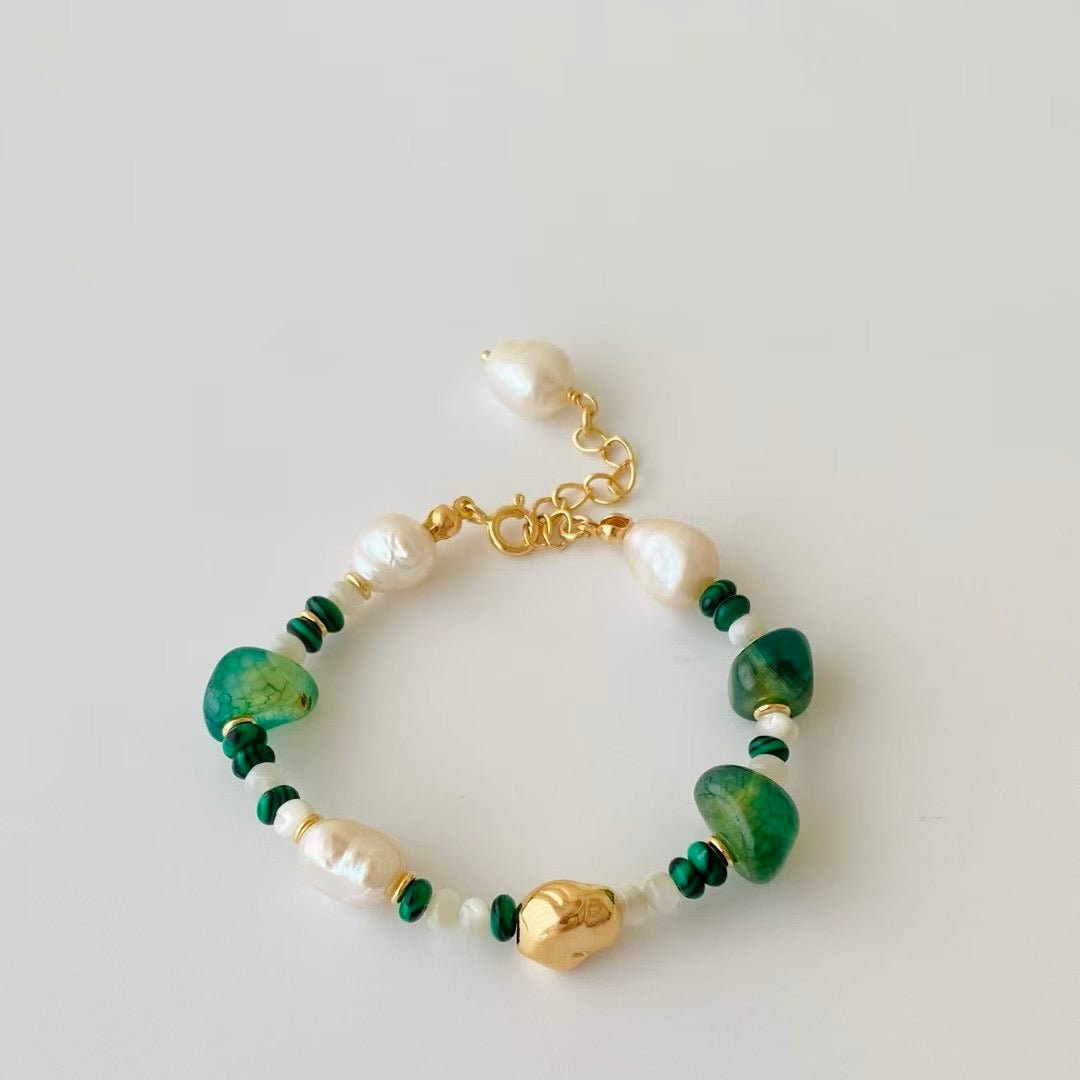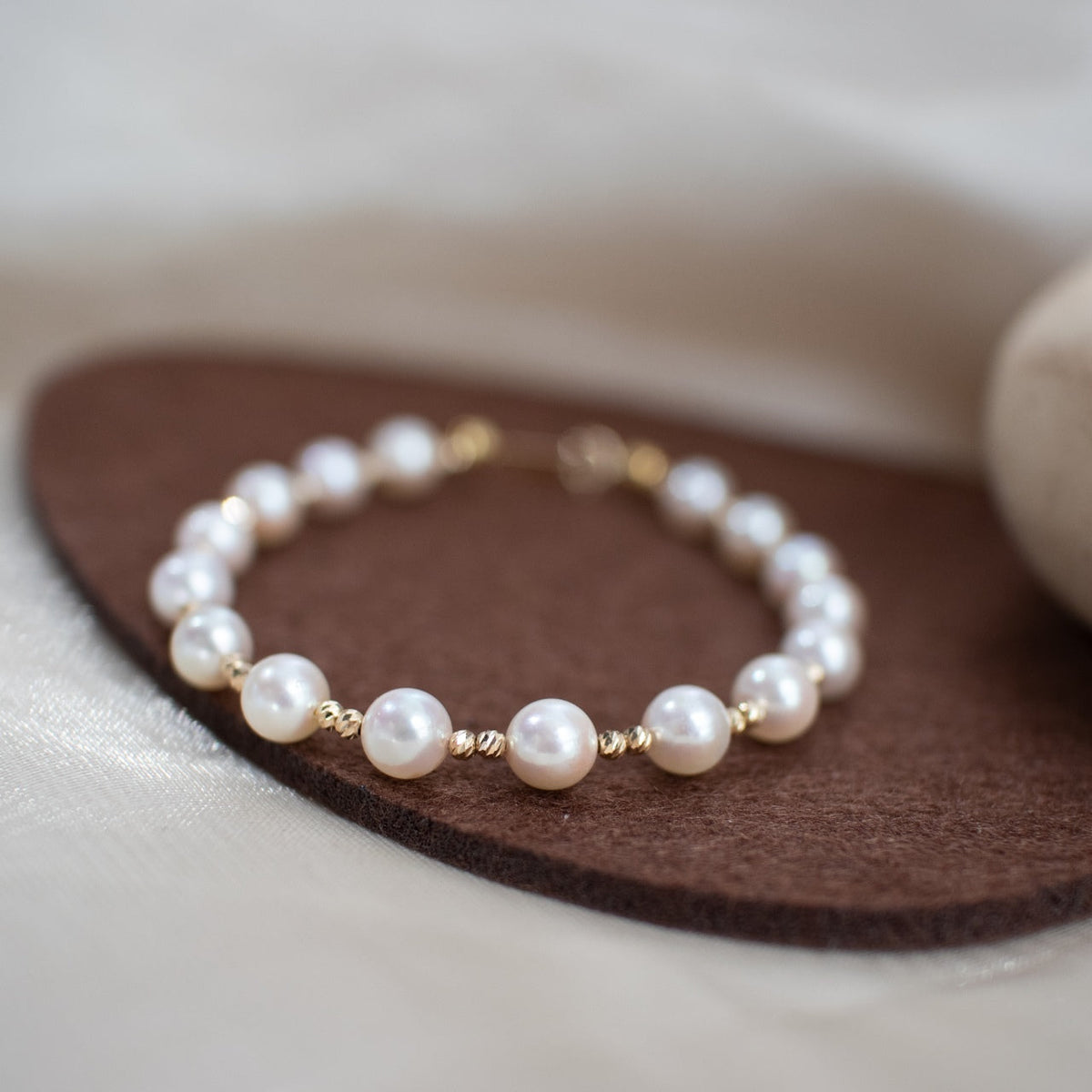
Pearl hand link cleans and maintains itself after being exposed to seawater.
When a pearl bracelet comes into direct contact with seawater during a beach trip, coastal walk, or water-based activity, it picks up far more than just simple moisture from the ocean. Seawater carries dissolved salt, tiny mineral particles, and trace organic substances that can settle deep into the fine natural pores of the pearl’s surface. If these residues are left unattended, they can gradually erode the delicate outer nacre layer, dull the signature soft luster, and create subtle long-term damage that is easy to miss at first glance. Proper cleaning and care immediately after seawater exposure is the most effective way to preserve the natural beauty and structural integrity of the bracelet, without causing unintended harm to the organic gem material.
Immediate first steps right after leaving the seawater environment
As soon as you step away from the beach or coastal water, gently wipe the entire surface of the pearl bracelet with a soft, lint-free dry cloth. This quick initial pass removes the majority of liquid seawater and loose surface salt particles before they have a chance to dry, crystallize, and get trapped in the tiny gaps between individual pearls or around any connecting components. Do not apply pressure or rub hard at this stage, because wet salt particles can act like mild abrasive grit and create micro-scratches across the soft nacre surface if you drag them roughly across the pearl.
Avoid rolling or twisting the bracelet in your hands while it still carries seawater residue. The thin layer of salt water that sits on the pearl surface can easily transfer onto your skin, and repeated contact between adjacent wet pearls can spread mineral deposits unevenly across their surfaces. Lay the bracelet flat on a clean dry towel in a shaded, low-humidity spot while you finish packing up your belongings at the beach, so it does not get jostled around with sandy items in your bag.
Never leave the seawater-exposed pearl bracelet sitting out in direct strong sunlight to dry off quickly. Intense heat from the sun combined with evaporating salt can speed up the drying process too rapidly, leaving salt crystals trapped in the natural surface pores of the nacre. These hidden crystals will slowly draw out small amounts of moisture from the pearl’s organic binder material, making the surface feel dry and losing its smooth, naturally hydrated texture over time.
Gentle cleaning process to remove residual salt deposits
Prepare a small bowl of lukewarm clean water that is close to normal body temperature, no hotter than 30 degrees Celsius. Do not add any soap, detergent, cleaning solution, or chemical additives to the water, because even mild household cleaning agents can break down the delicate organic components that hold the pearl’s nacre layers together. Plain clean warm water is more than enough to dissolve and lift away any remaining salt residue that did not get removed during the initial dry wipe.
Dip a separate new soft lint-free cloth into the warm water, wring it out completely so it is only slightly damp and not dripping wet at all. Gently wipe every surface of each individual pearl, moving slowly and carefully to work the damp cloth into the small gaps between pearls and around all connecting points. The slightly damp cloth will dissolve any leftover dried salt crystals without forcing excess water deep into the inner structure of the bracelet.
Once you have wiped every part of the bracelet, take a second clean dry lint-free cloth and go over the entire piece again to remove all remaining traces of moisture. Pay extra attention to the small crevices where salt deposits are most likely to hide, making sure no damp spots are left behind in these hard-to-reach areas. This full two-step wipe process removes almost 100 percent of seawater related residues, without ever submerging the bracelet fully in standing water.
Post-cleaning care and long term condition checks
After the cleaning process is complete, leave the bracelet laid out flat on a dry soft cloth in a well-ventilated shaded area for 15 to 20 minutes, to make sure every tiny trace of hidden moisture has fully evaporated. Do not rush this step by using a hair dryer, placing it near a heater, or exposing it to any source of forced hot air. Rapid temperature change and forced hot airflow can cause uneven drying that creates tiny invisible cracks in the nacre surface, ruining the even smooth luster the pearl is known for.
Once the bracelet is completely dry, take a few moments to run your fingertips very gently across the surface of each pearl. You should feel a completely smooth, consistent texture with no faint gritty or rough patches left behind. If you notice any spot that still feels slightly gritty, that means a tiny hidden salt crystal was not removed during the first cleaning pass. Simply repeat the damp wipe step on that specific area until the surface feels perfectly smooth again.
Store the cleaned bracelet separately inside a soft fabric pouch, away from other hard jewelry pieces that could scratch the pearl surface, for at least 24 hours after seawater exposure. This gives the natural moisture balance inside the pearl’s nacre layers time to fully stabilize back to its normal state, and ensures no remaining hidden salt residue can cause slow, gradual damage long after you have returned from the coast. This careful post-exposure routine keeps the pearl bracelet’s natural luster intact, even after multiple trips near the ocean.