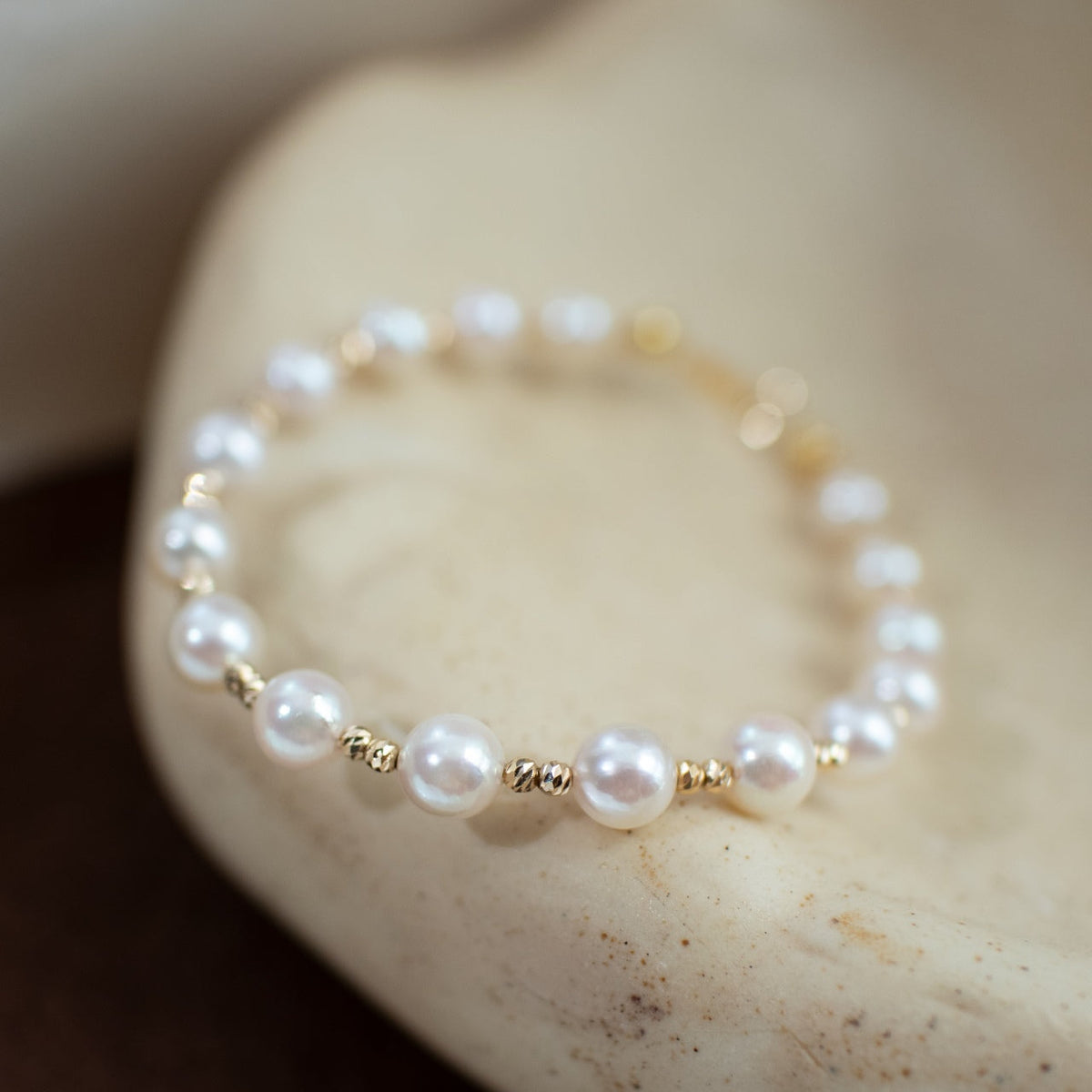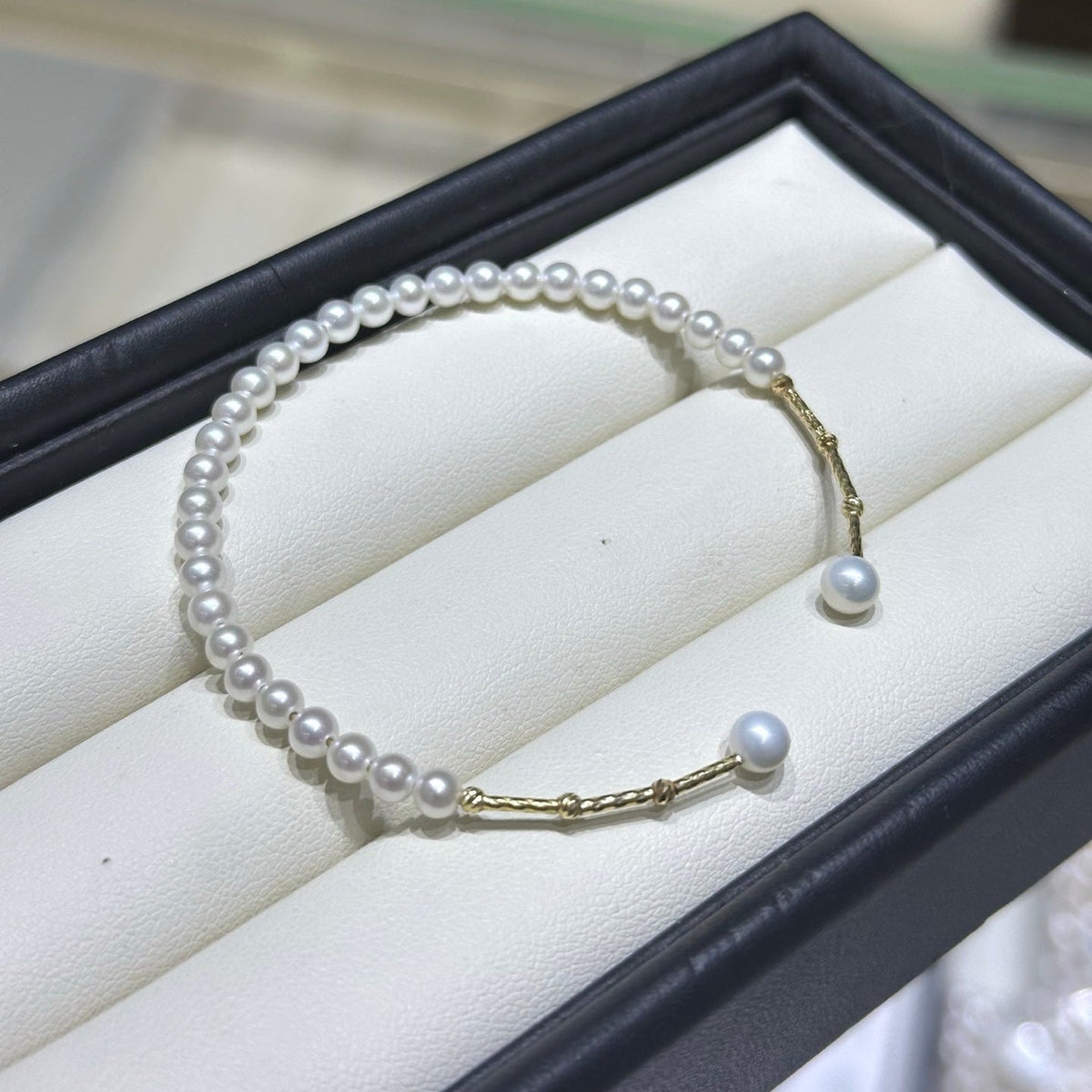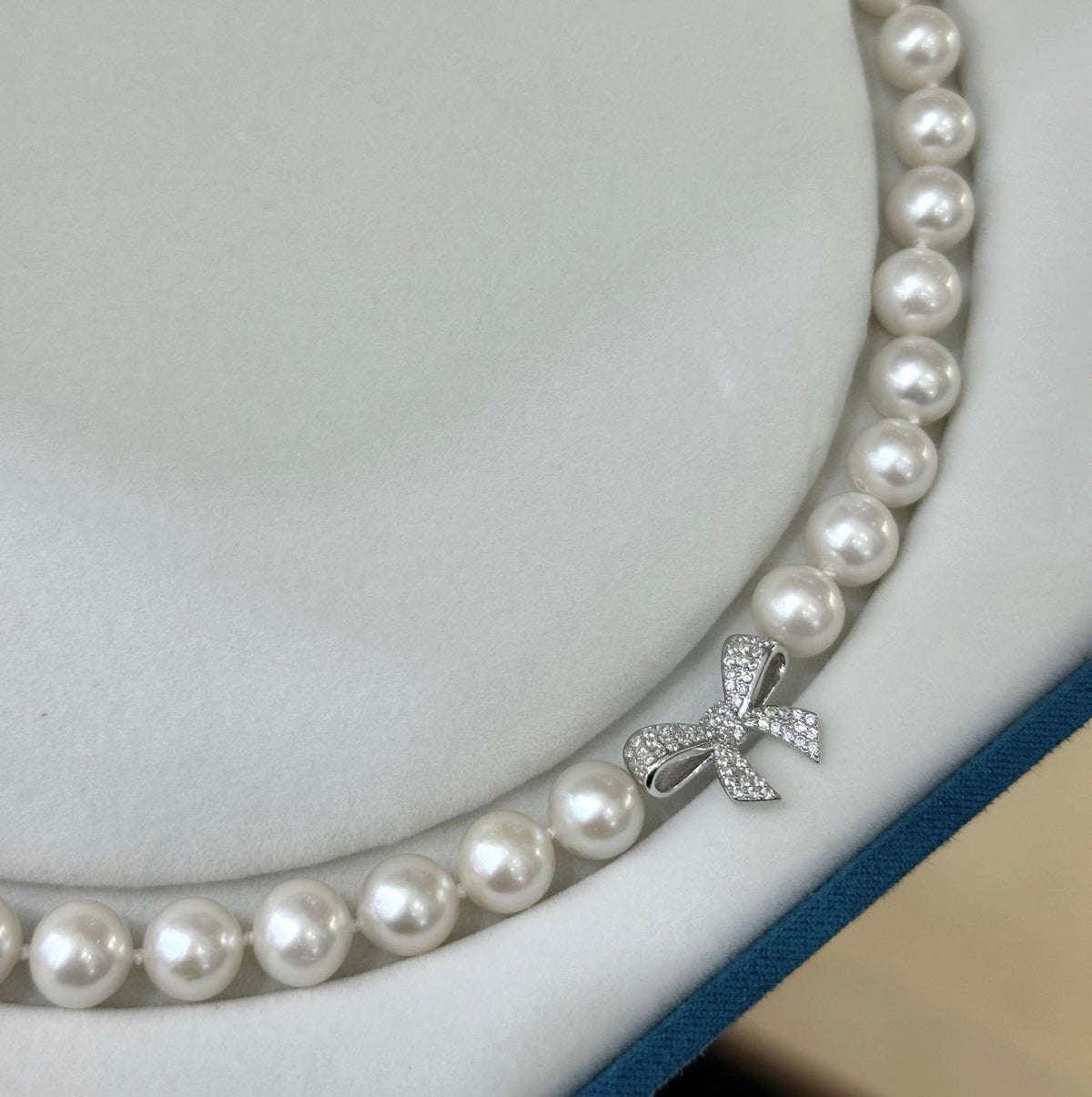
Tips for Selecting and Pairing Necklace Styles for Pearl Bracelets
How to Stack Pearl Bracelets Like You Actually Know What You're Doing
Stacking bracelets sounds easy until you try it. Three strands look like a mess. Two strands look boring. Four strands look like you raided a jewelry box and threw everything on at once. The difference between "effortlessly chic" and "too much" comes down to a few rules that most people never learn because nobody bothers to explain them clearly. So let's fix that.
The Golden Rule Most People Ignore
Before you touch a single bracelet, you need to understand one thing: stacking works because of contrast, not because of matching. If every bracelet on your wrist looks the same — same pearl size, same color, same style — it just looks like one thick bracelet. Boring. Flat. No dimension.
The magic happens when each piece brings something different to the table. One is bold, one is delicate. One is metal, one is cord. One is white, one is pink. That tension between the pieces is what makes stacking look intentional instead of accidental.
Building Your Stack: Start With a Base
Pick One "Anchor" Bracelet First
Every good stack has a foundation — the piece that sits closest to your hand and does the heavy lifting. This should be your most substantial bracelet. Think a single strand of 7-9mm pearls on a chain clasp, or a double-strand of 5-6mm pearls on elastic cord. Something with real visual weight.
This anchor sets the tone for everything else. If your anchor is a chunky white pearl strand, everything you add on top should complement that energy — not compete with it. Don't put a tiny 3mm baby pearl strand next to a 9mm anchor. The size gap will look awkward, like a parent walking with a toddler. Keep the gap reasonable.
The Second Layer Should Be the Opposite
Here's where it gets fun. Your second bracelet should contrast with your anchor in at least one way. If the anchor is a chain clasp, go elastic cord for the second piece. If the anchor is white pearls, go pink or lavender for the second. If the anchor is large pearls, go smaller pearls for the second.
This contrast creates visual rhythm. The eye moves from one piece to the next and finds something new each time. That's what makes a stack look curated instead of random.
The Number Game: How Many Is Too Many
Two Bracelets: Safe, Clean, Always Works
If you're new to stacking or you just want something that looks good without thinking too hard, two bracelets is your number. One anchor, one contrast piece. Done. It works with every wrist size, every pearl size, every outfit. You literally cannot mess this up.
Two bracelets also give you the most versatility. You can wear them together for a stacked look, or wear just one when you want something simpler. That flexibility is underrated.
Three Bracelets: The Sweet Spot for Most People
Three is where stacking really starts to shine. You get enough variety to create depth, but not so many that it looks cluttered. The trick with three is to keep one piece as the dominant one, one as the middle ground, and one as the accent.
For example: a 7mm white pearl chain clasp bracelet as the anchor, a 5mm pink pearl elastic cord bracelet in the middle, and a thin gold bangle or a tiny charm bracelet as the accent on top. Three completely different textures, three different pearl sizes, three different vibes — but they all live together because each one earns its spot.
Four or More: Only If You Know What You're Doing
Four bracelets can look incredible, but the margin for error is razor thin. The rule here is that at least two of the four must share something in common — same metal tone, same pearl color family, or same cord style. That shared element ties the whole stack together so it doesn't fall apart visually.
If all four pieces are completely different in every way — different metals, different pearl colors, different sizes, different cord types — it looks chaotic. Not stylish. Chaotic. The difference is subtle but people notice it even if they can't explain why.
Matching Metals Across Your Stack
This is the mistake that ruins more stacks than anything else. You have a gold charm bracelet, a silver pearl strand, and a rose gold bangle all on one wrist. It looks like three different people's jewelry got mixed up in a drawer.
Pick a metal family and stick with it. All gold. All silver. All rose gold. If you must mix, keep it to two metals max, and make sure one is clearly dominant. Gold and rose gold mix beautifully together. Silver and white gold work fine. But gold and silver together? That's a look that's very hard to pull off without seeming like you didn't try.
The metal of your clasp matters too. If your anchor bracelet has a gold lobster clasp, try to match that gold tone in at least one other piece on the stack. Even if the other piece is a simple cord bracelet with a tiny gold bead, that small connection ties everything together.
Pearl Color Coordination Without Looking Matchy-Matchy
The One-Family Rule
You don't have to wear all white pearls. In fact, all white can look a little sterile when stacked. But you should stay within one color family. White and cream? Perfect. White and light pink? Beautiful. White and black? Bold but it works. White and deep purple? Maybe not.
Staying within a family means the colors feel related even though they're not identical. It creates that "oh, these look so good together" effect without looking like you tried too hard to match.
Use One Non-Pearl Piece to Break Things Up
This is a pro move. If you have two pearl bracelets stacked together, add a third piece that isn't pearl at all — a thin gold chain, a leather cord, a beaded bracelet with colored stones. That non-pearl piece acts as a palette cleanser. It gives the eye a rest from all the pearls and makes the whole stack feel more dynamic.
A single gold chain bracelet between two pearl strands looks incredibly sophisticated. The metal catches light differently than the pearls, and it creates this beautiful interplay of textures that pure pearl stacking can never achieve.
Wrist Size Changes Everything
Narrow Wrists: Keep It Tight and Vertical
If your wrist is under 14cm, you don't have a lot of real estate. Every millimeter counts. Stick to two bracelets max. Keep them close to the wrist — not dangling. Avoid bulky charms. Avoid large pearls. Think 4-6mm pearls on thin elastic cord, stacked with one delicate chain bracelet. The goal is to add interest without adding width.
Wide, chunky stacks will swallow a narrow wrist whole. You want vertical interest, not horizontal bulk.
Average Wrists: You Have Room to Play
Wrists between 14cm and 16cm are the Goldilocks zone for stacking. You can do two, three, even four bracelets without it looking overcrowded. This is where you can experiment with mixing strand counts — a single strand plus a double strand plus a charm bracelet looks great here. You have enough space for each piece to be seen individually while still feeling like a cohesive stack.
Wider Wrists: Go Big or Go Home
Wrists over 16cm can handle more. Larger pearls, more strands, even a watch paired with bracelets works here. The key is to balance the visual weight. If you go with big pearls, don't add too many pieces — three max. If you go with many pieces, keep the pearls smaller so nothing fights for dominance.
A wide wrist with a single tiny bracelet looks lonely. A wide wrist with five massive bracelets looks ridiculous. Find the middle ground where each piece feels like it belongs.
The Charm Problem in Stacking
Charms are tricky when you're stacking. One charm is cute. Two charms is playful. Three or more charms and your wrist starts sounding like a wind chime every time you move.
If you're stacking multiple bracelets, limit charms to one piece in the entire stack. That one charm becomes the focal point — the thing people notice first. Put it on the topmost bracelet so it catches light and movement. If every bracelet has its own charm, they all cancel each other out and nothing stands out.
Also, make sure your charms don't tangle. Metal charms on chain bracelets will clink and tangle with each other throughout the day. It's annoying. If you have multiple charm bracelets in your stack, make sure the charms are small and sit close to the wrist so they don't swing around and knock into each other.
Mixing Pearl Types in One Stack
Freshwater and saltwater pearls look different — freshwater tends to be more irregular in shape, saltwater tends to be rounder and more uniform. Can you mix them in a stack? Yes, but be careful.
The safest approach is to keep them on separate bracelets rather than mixing them on the same strand. A freshwater pearl elastic cord bracelet stacked with a saltwater pearl chain clasp bracelet looks intentionally eclectic. But mixing both types on a single strand can look inconsistent, like you couldn't find matching pearls so you just threw different ones together.
If you do mix pearl types, make sure the size difference is obvious. A 4mm freshwater pearl next to a 7mm saltwater pearl on the same strand looks like a mistake. A 4mm freshwater bracelet stacked with an 8mm saltwater bracelet looks like a choice.
The Order Matters More Than You Think
Which bracelet goes on first — the one closest to your hand or the one furthest away? This actually changes how the stack looks.
The piece closest to your hand (the anchor) should be the heaviest, the boldest, the most substantial. It sits flat against your skin and does the most work. As you move up the wrist, each piece should get slightly lighter or more delicate. This creates a natural taper that draws the eye upward and makes the whole stack feel balanced.
If you put the most delicate piece at the bottom and the chunkiest at the top, the stack looks top-heavy and unstable. It's a small detail, but it's the difference between a stack that looks professional and one that looks like you threw it on in the dark.
Daily Wear vs Occasion Stacking
For Everyday: Keep It to Two, Max Three
Your daily stack should be low-maintenance. Two bracelets that you can put on in ten seconds and forget about. One pearl strand, one metal chain. Or one elastic cord bracelet, one thin bangle. Something you can type in, cook in, shower in (yes, some people shower in their pearl bracelets — we won't judge, but we will say it's not great for the pearls long-term).
For Nights Out: Go Bold, Go Three or Four
Evening is when you earn the right to go bigger. Add the charm bracelet. Throw in that second pearl strand. Mix metals if you're feeling daring. This is where stacking becomes a real style statement instead of just an accessory. The lighting at night catches charms and metal in ways that daytime never will, so use that to your advantage.