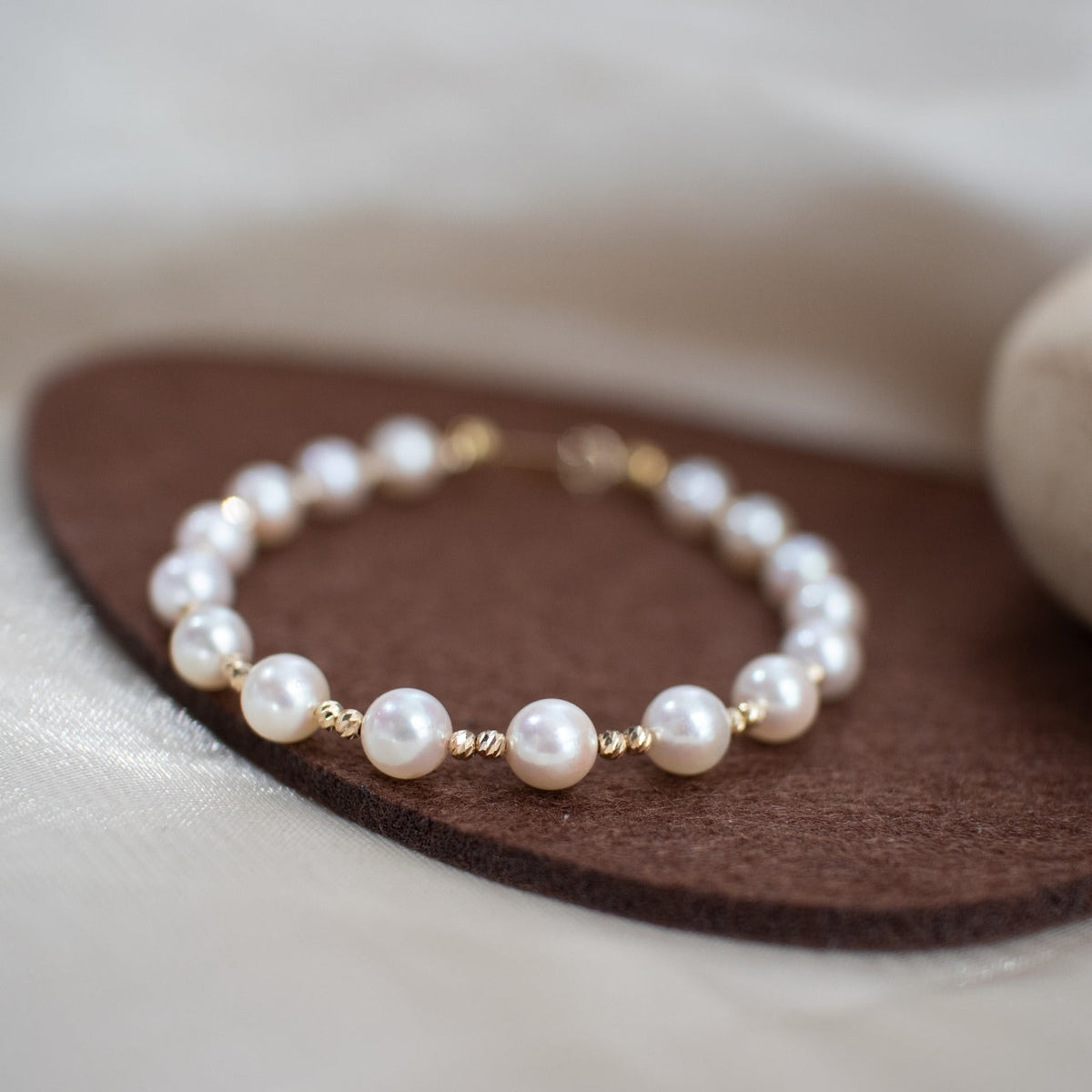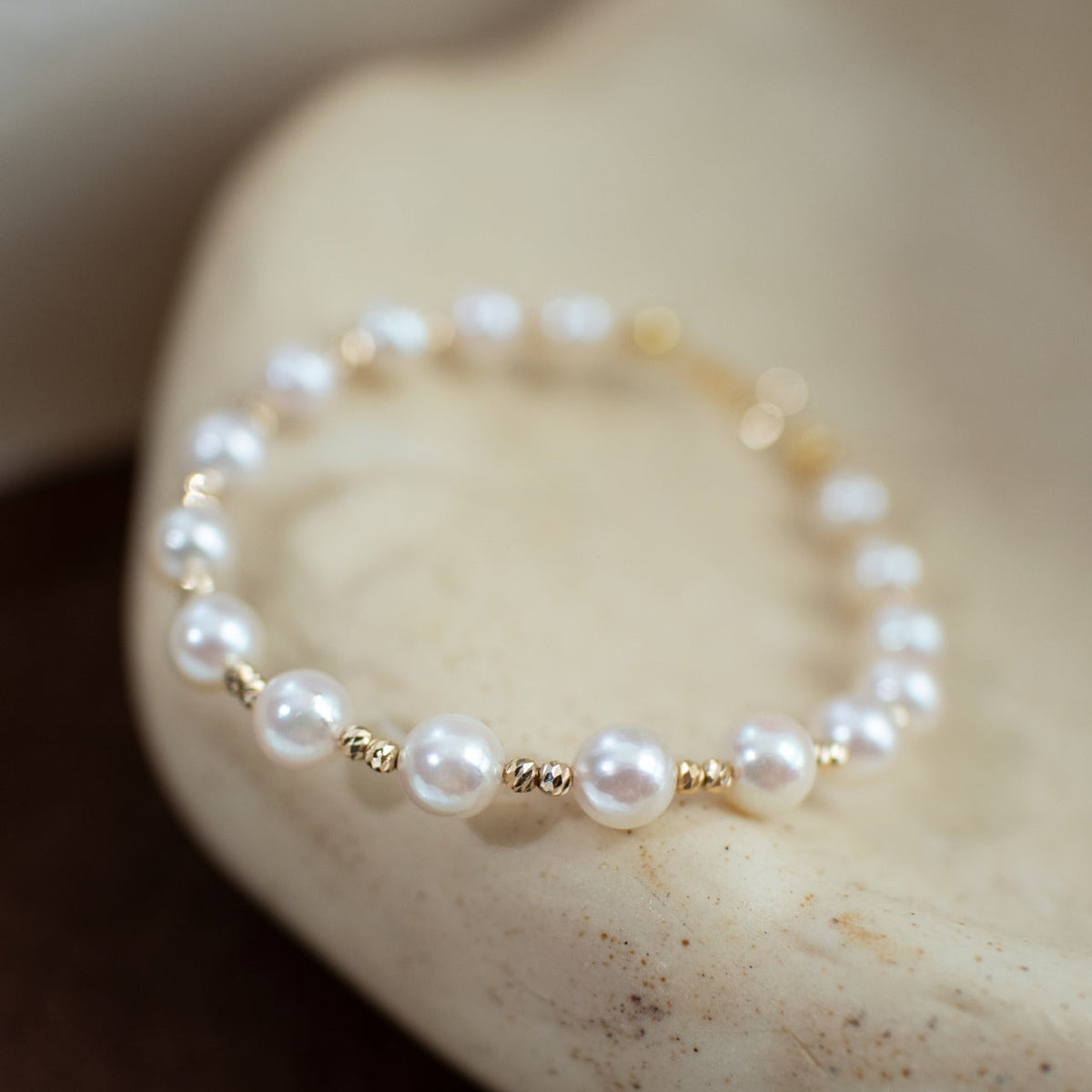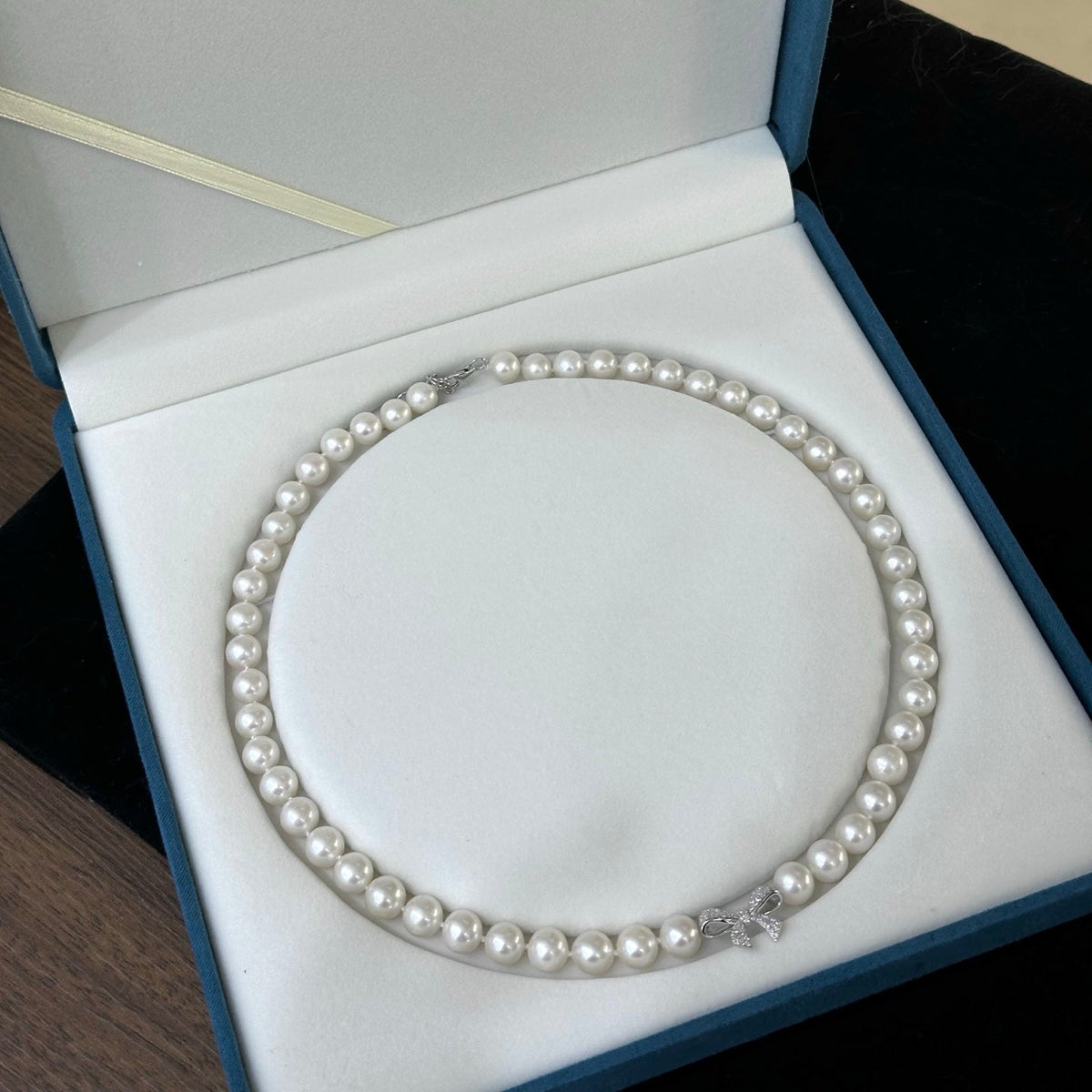
Selection of pearl bracelets: Differentiating between natural pearls and imitation pearls
Natural vs Fake Pearl Bracelet: How to Tell the Difference Before You Buy
You walk into a store or browse online and every pearl bracelet looks the same. Shiny. Round. Beautiful. But behind that glow, some of those pearls spent years growing inside an oyster and some of them spent hours rolling off a factory line. The difference matters — not just for your wallet, but for how the bracelet looks, feels, and ages over time. Learning to spot the difference isn't hard. You just need to know where to look.
Why This Distinction Actually Matters More Than You Think
Most people assume fake pearls look obviously fake. That was true twenty years ago. Today's imitation pearls are incredibly convincing. A good fake can fool even experienced jewelry lovers at first glance. But here's the thing — they don't hold up. Within months, the coating peels, the luster dies, and the bracelet looks completely different from the day you bought it. A natural pearl bracelet might cost more upfront, but it still looks beautiful five, ten, twenty years later. That's not true for fakes.
Knowing the difference protects you from wasting money on something that'll look terrible in a year. It also helps you understand what you're actually paying for when you see a price tag.
The Touch Test: What Your Fingers Tell You
Real Pearls Feel Cool and Slightly Gritty
Pick up a natural pearl and hold it between your thumb and finger. It should feel cool to the touch — not room temperature, not warm. Pearls are organic and they take on the temperature of whatever they're near, but they have a specific coolness that imitation pearls just don't replicate.
Now rub two natural pearls together gently. You'll feel a slight grit, almost like very fine sandpaper. That's because natural pearls are made of layered nacre, and those layers create a tiny bit of friction. Fake pearls feel perfectly smooth — almost slippery — when you rub them together. No grit. No texture. Just plastic-smooth perfection.
That grit is actually a good thing. It means the pearl is real.
Fake Pearls Feel Warm and Too Perfect
Imitation pearls are usually made from glass, plastic, or shell powder coated with a pearlescent finish. They feel warmer than natural pearls because they don't have the same thermal properties. And they feel too smooth. No imperfections. No texture. If a pearl feels like a tiny marble, it probably is one.
The Visual Clues Your Eyes Can Catch
Look at the Surface Under Good Light
Hold the pearl up to a light source and look closely at the surface. A natural pearl will have tiny imperfections — small bumps, faint rings, maybe a tiny pit or two. These are growth marks, and they're proof the pearl formed inside a living creature over months or years. No two natural pearls look exactly alike, even on the same strand.
A fake pearl looks flawless. Or rather, it looks flawlessly uniform. Every pearl on the strand is identical in shape, size, and color. That perfection is actually the giveaway. Nature doesn't produce identical pearls. Factories do.
Check the Luster From Different Angles
Luster is the glow that sits on the surface of a pearl. Natural pearls have what jewelers call "deep luster" — the light seems to come from inside the pearl, not just bounce off the surface. When you tilt a natural pearl, you'll see a soft, rolling glow that shifts and moves. It looks alive.
Fake pearls have "surface luster" — the shine sits on top like a coat of paint. When you tilt them, the reflection is sharp and flat, almost mirror-like. It doesn't have that inner depth. It looks shiny, but it looks shiny in a cheap way. If the pearl looks like it's wearing a shiny coat of nail polish, it probably is.
The Drill Hole Tells You Everything
This is the trick that professionals use and almost nobody talks about. Look at the hole where the pearl is strung. On a natural pearl, the drill hole will be slightly irregular — not perfectly round, maybe a tiny bit off-center. You might even see layers of nacre inside the hole, like the rings of a tree.
On a fake pearl, the drill hole is perfectly clean and perfectly round. The coating inside the hole matches the outside exactly. No layers. No rings. Just a smooth, uniform tunnel. If you have a magnifying glass or even a good phone camera zoom, check the holes. They never lie.
The Tooth Test: Yes, Actually Bite It
How to Do It Without Looking Crazy
Gently rub the edge of a pearl against the side of your front tooth. Not hard — just a light drag. A natural pearl will feel slightly gritty and sandy, almost like fine sand. That's the nacre. It's made of calcium carbonate crystals stacked in layers, and they have texture.
A fake pearl will feel perfectly smooth, almost glassy. Some people describe it as feeling like biting a tiny piece of plastic. If there's zero grit and zero texture, the pearl is almost certainly not natural.
This test works because fake pearls are coated with a smooth lacquer or plastic layer. That coating feels nothing like real nacre.
The Weight Difference Is Surprising
Natural Pearls Are Heavier Than They Look
Pick up a natural pearl and then pick up a fake pearl of the same size. The natural one will feel noticeably heavier. Pearls are dense because they're made of actual mineral layers built up over time. Glass and plastic imitations are lighter — sometimes significantly lighter.
If a bracelet feels suspiciously light for its size, that's a red flag. A heavy bracelet doesn't guarantee real pearls, but a light one almost guarantees fake ones.
Types of Imitation Pearls and How to Spot Each One
Glass Pearls Are the Most Common Fake
Glass pearls are the most widely used imitation. They're made by coating a glass bead with a pearlescent finish. They can look convincing in photos, but up close the surface is too smooth and the luster is too sharp. The drill holes are perfectly round. They feel warm. They're light. If you know what to look for, they're easy to catch.
Plastic Pearls Are the Cheapest Option
Plastic pearls are even lighter than glass and they feel completely different. They're warm to the touch, they have zero grit, and they tend to yellow over time. A plastic pearl bracelet that looked white when you bought it might turn slightly yellow or cream within a year. That's the plastic degrading. Natural pearls never yellow like that.
Shell Pearls Are Tricky Because They're Partially Real
Here's where it gets confusing. Shell pearls are made from real shell material — usually mother-of-pearl — that's been ground up, shaped, and coated. They're not fully fake, but they're not fully natural either. They sit in a gray area.
How to tell: shell pearls have a different luster than natural pearls. It's flatter, less deep. They also tend to be more uniform in shape because they're machine-cut. And if you look at the drill hole, you won't see the layered nacre rings you'd see in a real pearl. The hole will look uniform all the way through.
Freshwater Cultured vs Saltwater Cultured vs Fake
Even among "real" pearls, there are tiers. Freshwater cultured pearls are real pearls grown in mussels. They're genuine nacre, but they tend to be less round and have more surface variations. Saltwater cultured pearls (like Akoya or South Sea) are real pearls grown in oysters, usually rounder and with deeper luster.
Both are real. Neither is fake. But freshwater pearls can sometimes be mistaken for fakes because they're less perfect. Don't confuse "imperfect" with "fake." A slightly off-round freshwater pearl is still a real pearl. A perfectly round glass bead is still fake.
The Water Test That Actually Works
Drop Them In and Watch
This one sounds dramatic but it works. Drop a pearl into a glass of water. A natural pearl will sink slowly and settle at the bottom. It won't float, and it won't bob around. It just sinks with a calm, heavy grace.
A fake pearl — especially plastic ones — might float or hover in the middle of the water. Glass pearls usually sink but they sink faster than natural pearls because they're denser in a different way. The behavior in water is subtle but noticeable if you test a few side by side.
What About "Enhanced" Pearls
Some pearls are real but have been treated. They might be bleached to lighten the color, or coated with a thin layer of nacre to improve the luster. These are still technically real pearls, but they're not in their natural state.
Bleached pearls tend to have a very uniform, almost white-out color with no overtones. Natural pearls always have subtle color shifts — a white pearl might have a pink overtone or a silver overtone. If a pearl is pure white with zero color shift, it's probably been bleached.
Coated pearls are harder to spot. The coating adds luster but it can wear off over time. If a pearl looks way shinier than the others on the same strand, it might be the coated one. That's not always a dealbreaker, but it's worth knowing.
The Cheapest Red Flags to Watch For
If the Price Seems Too Good, It Is
This isn't a hard rule, but it's a reliable gut check. If you find a "pearl" bracelet for a price that seems unbelievably low, the pearls are almost certainly not natural. Real pearls take years to grow. They're harvested, sorted, graded, and strung by hand. That process costs money. A bracelet that costs almost nothing is using almost nothing.
If Every Pearl Looks Identical, Walk Away
Nature is messy. Real pearls on a strand will have slight differences in size, shape, color, and luster. That variation is normal and beautiful. If every single pearl on the strand is a perfect sphere with the exact same shade and the exact same glow, you're looking at factory-made imitations.
If the Listing Says "Pearl-Like" or "Pearl-Inspired," It's Fake
This one is obvious but people still fall for it. If the description uses words like "pearl-like," "pearl-inspired," "faux pearl," or "imitation pearl," just stop. There's no decoding needed. They're telling you exactly what it is.
Trusting Your Gut After You Learn the Basics
Once you've done the touch test, checked the drill holes, felt the weight, and looked at the luster, you'll start developing an instinct for it. You'll pick up a bracelet and just know. That instinct comes from paying attention to the details — the grit, the glow, the weight, the tiny imperfections that prove something was made by nature and not by a machine.
The best pearl bracelet you can buy is one where every single pearl tells a story of growing slowly inside a living creature. Fakes can look the part for a while. But real pearls? They get more beautiful with time. And that's something no imitation will ever replicate.