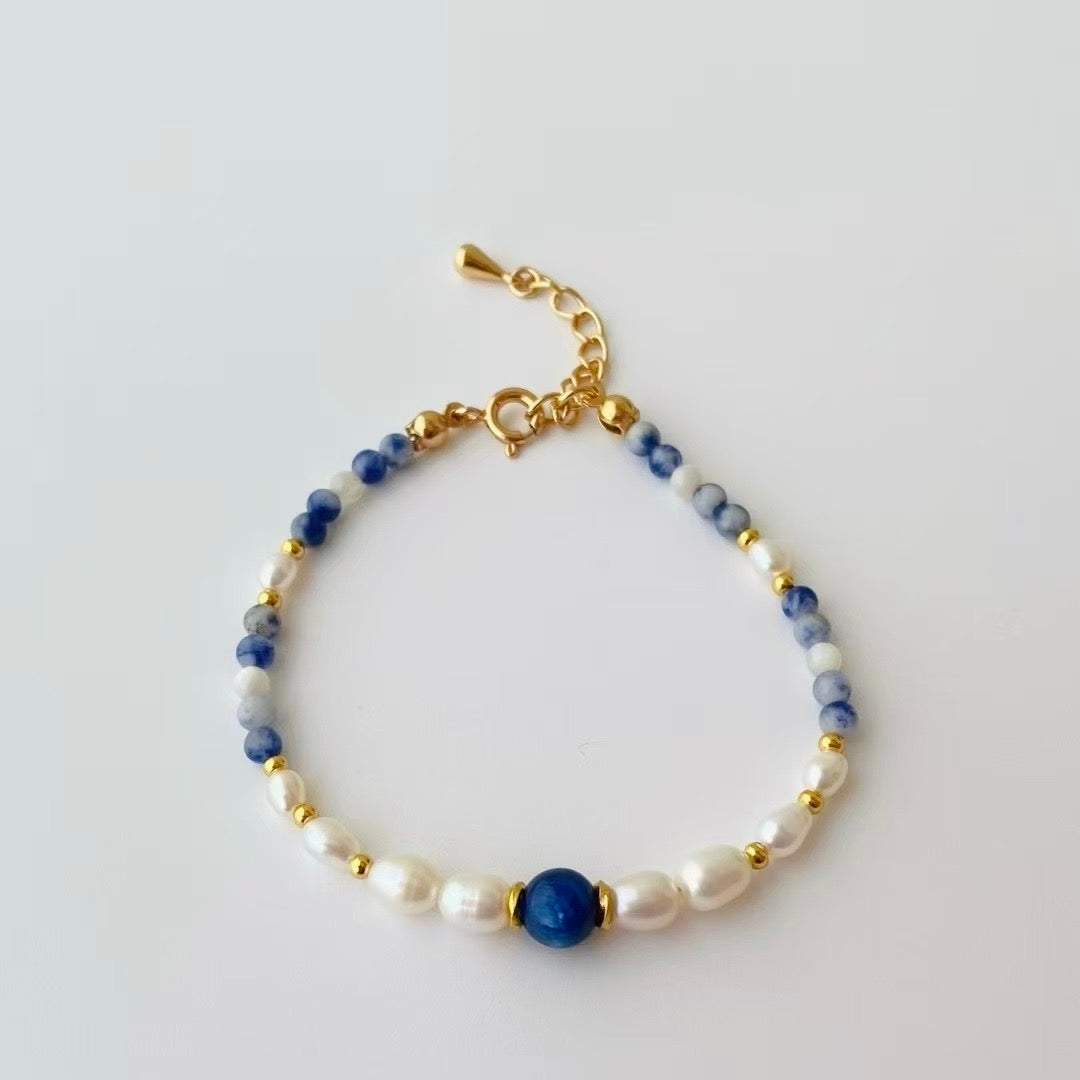
Reasons for damage of pearl bracelets due to improper cleaning
Harsh Chemicals That Erode Pearl Nacre Over Time
Many common household cleaning solutions contain acidic, alkaline, or abrasive ingredients that break down the delicate outer nacre layer of pearls. Vinegar, lemon juice, bleach, ammonia, and strong dish soaps can eat away at the smooth, iridescent surface, creating tiny, invisible scratches and dull spots that slowly spread across the bead. Even seemingly gentle hand sanitizer, perfume, or hairspray residue left on pearls for long periods can chemically alter the nacre, making it lose its natural luster and turn cloudy. These chemical reactions do not show immediate visible damage, so many people do not notice the harm until the pearls have already lost their original shine.
Improper Water Exposure That Weakens Internal Structure
Fully submerging a pearl bracelet in water or running it under a tap during cleaning saturates the thin silk or nylon thread strung between the beads. The water seeps into the small drill holes on each pearl, and trapped moisture inside the gaps can cause the thread to stretch, fray, or even rot over time. Even if the outer surface of the bracelet feels dry after a few hours, tiny pockets of water can stay hidden deep in the knots and drill holes for days, leading to hidden mold or thread breakage later. Hot water or steam cleaning adds extra risk, as the sudden temperature change can create micro-cracks in the nacre that spread outward over months of regular wear.
Rough Physical Cleaning That Scratches and Distorts Shape
Using stiff-bristled brushes, rough scrub pads, or abrasive polishing cloths to rub dirt off pearls will leave permanent, fine scratches across the soft nacre surface. Picking at debris stuck in the gaps with sharp tools like safety pins, toothpicks, or cotton swabs with hard plastic tips can chip the edges of the pearl drill holes, loosen the knots, or even snap the thin string. Rubbing pearls against each other vigorously during cleaning, or stacking them under heavy items while they dry, can create uneven pressure that wears down one side of the pearl faster than the rest, ruining its perfectly round shape and smooth finish. These physical damages are often irreversible, and they make the bracelet far more fragile and prone to breaking during regular daily wear.