
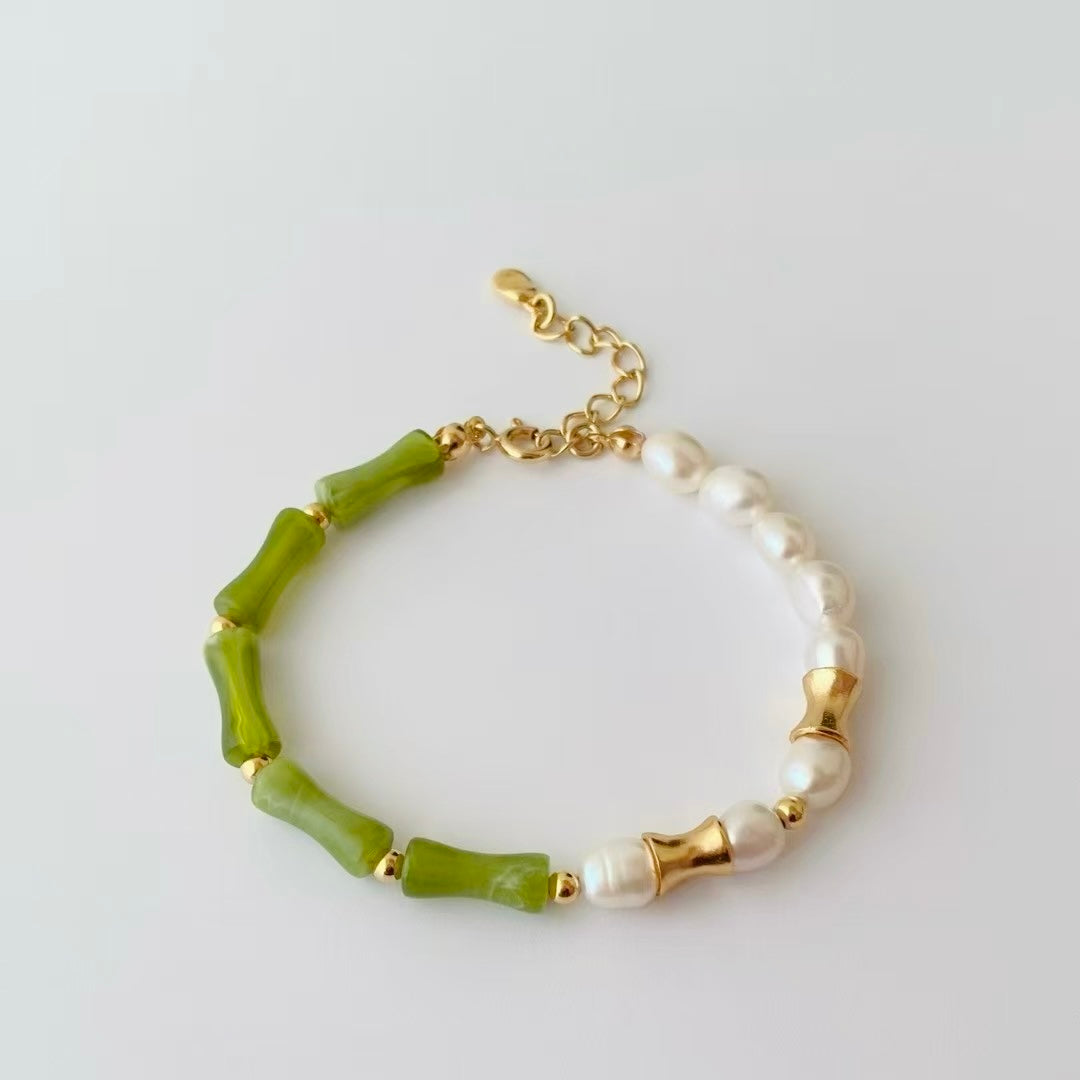
Pearl bracelet: Avoid squeezing and store properly.
Pearls form with a delicate internal structure that makes them far more fragile than they appear. Even light, steady pressure from other objects in a crowded storage space can slowly press into the nacre, leaving faint permanent dents or tiny cracks that ruin their smooth, round shape. These simple habits keep your pearl bracelet completely free of unnecessary pressure, so it stays perfectly round and intact for years of regular wear.
Prep the Bracelet Before You Store It
Before you put the bracelet away, lay it completely flat on a soft, clean towel in a relaxed, unclasped shape. Never coil it into tight loops, fold it over itself, or tuck it into a small space that forces the pearls to press against each other. Check that the clasp lies flat next to the pearls, not bent at an odd angle that could push into a nearby pearl when stored. This flat, relaxed shape distributes any tiny pressure evenly, instead of concentrating it on one small spot that could leave a mark over time.
Choose a Storage Spot With No Weight on Top
Pick a dedicated storage area where no other items will ever rest on top of the bracelet. Avoid stacking other jewelry boxes, books, or heavy accessories directly above the spot where you keep your pearls. Even the light weight of a few stacked items can create steady, constant pressure that slowly pushes into the soft nacre over weeks or months. A shallow, single-layer drawer or a small open compartment with nothing above it works perfectly for long-term storage without any top-down pressure.
Add a Soft, Thick Cushion Layer Below
Place a soft, thick cushion layer under the bracelet inside its storage space. A folded piece of smooth felt, a layer of dense cotton, or a soft microfiber pad creates a gentle buffer that absorbs any accidental small bumps or shifts from below. Make sure the cushion layer lies completely flat, with no wrinkles or raised edges that could press unevenly against the pearls. This extra layer stops the hard base of the drawer or box from transferring pressure directly to the bracelet, even if you accidentally set something slightly heavy nearby.
Keep It Separate From Other Hard Items
Store the pearl bracelet in its own isolated spot, completely separate from all other hard jewelry pieces, metal accessories, or sharp-edged items. Do not let it share a compartment with anything that could slide into it and press against the pearls from the side. Even light, repeated contact from a nearby ring or bracelet can create small pressure points that slowly wear down the nacre. An empty, dedicated space with soft walls on all sides keeps the bracelet fully protected from side pressure as well as weight from above.
Regular Quick Checks for Hidden Pressure Marks
Every few weeks, take the bracelet out of storage and hold it under soft, even light. Look closely at each pearl’s surface for any faint flat spots, tiny dents, or uneven areas that might have formed from unseen pressure. Run your finger lightly over the pearls to feel for any subtle dips or rough patches. If you spot any, adjust your storage setup right away—move the bracelet to a larger space, add more cushioning, or remove any items that might be pressing against it. These quick checks catch small issues early, before they turn into permanent damage.


