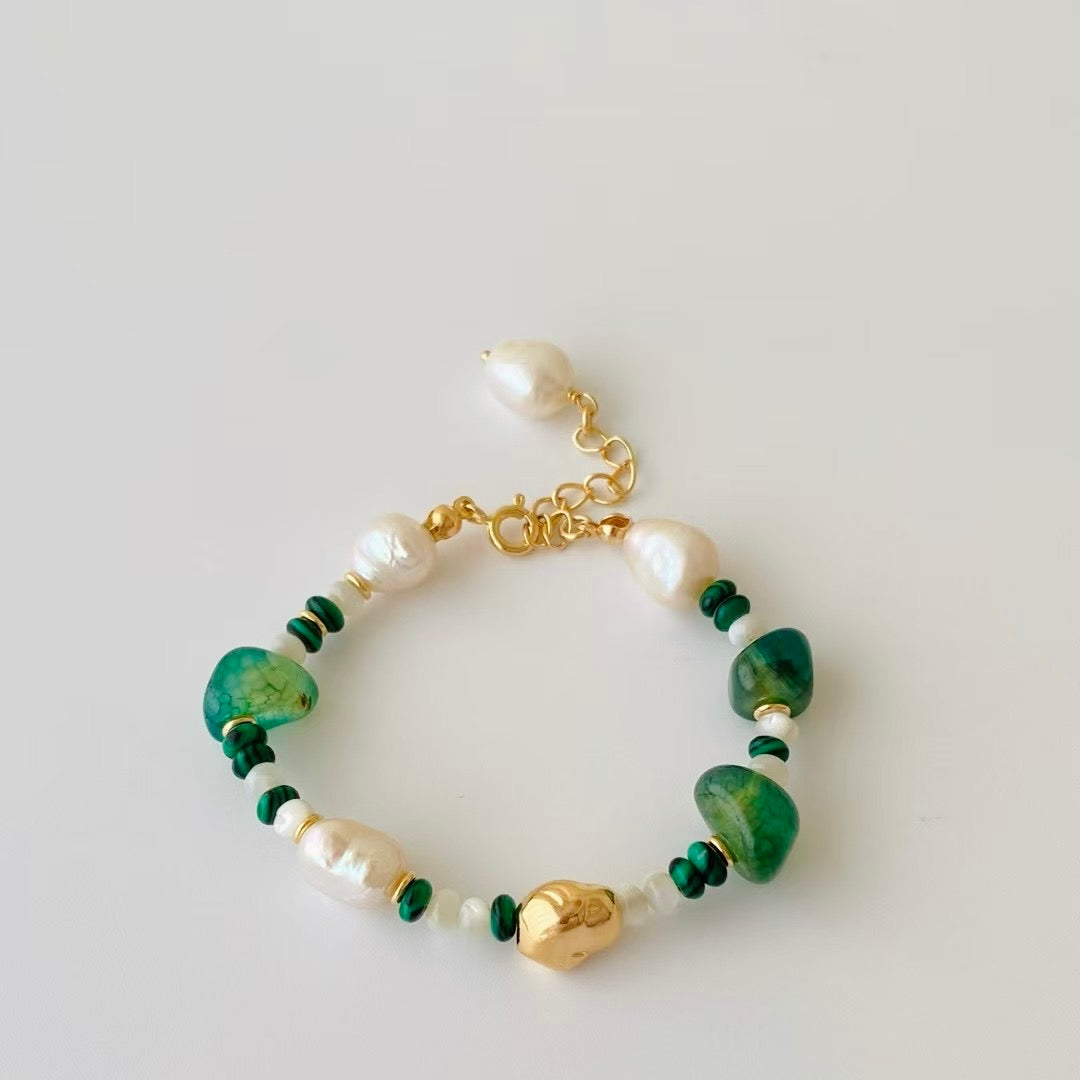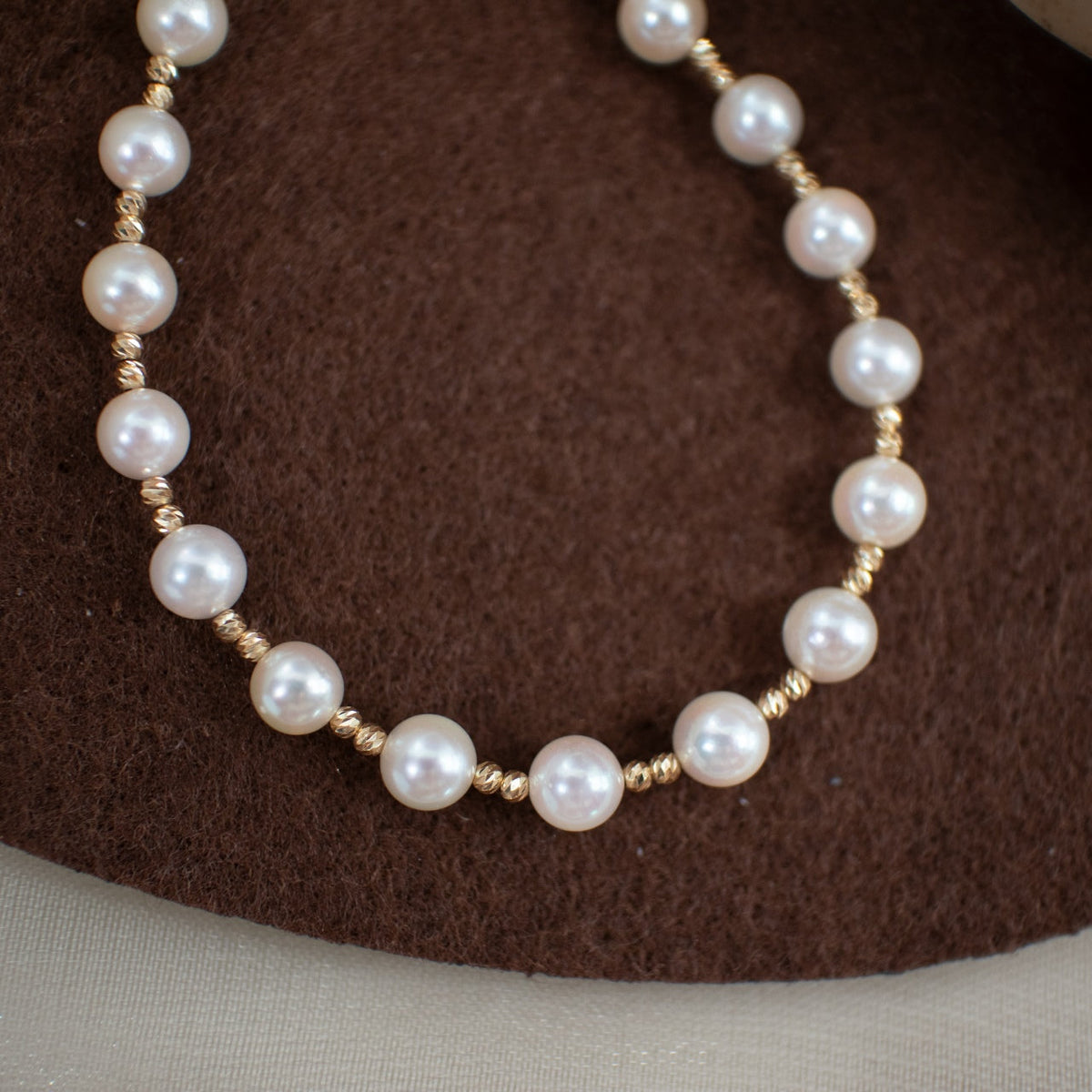
Common sense for maintaining pearl bracelets over a long period of time
Long-Term Pearl Bracelet Care: What Happens When You Wear Them Every Day for Years
Wearing a pearl bracelet every single day sounds romantic until you realize what that actually means for the pearls. Sweat, friction, skin oils, UV exposure, accidental knocks, and the slow creep of environmental damage all add up over months and years. The difference between a pearl bracelet that still glows after five years and one that looks chalky after two comes down to habits most people never think about.
What Daily Wear Actually Does to Pearls Over Time
Pearls are not inert. They are living gemstones in a sense, made of layers of aragonite crystal and conchiolin protein. Every time you put the bracelet on, your skin transfers oils, salt, and acids onto the surface. Over time, this builds up a microscopic film that dulls the luster. Most people notice this as a general fading, but it starts at the molecular level long before it becomes visible.
The friction from daily movement is another slow killer. Each time your wrist bends, the pearls rub against each other and against your skin. This micro-abrasion wears down the nacre layer by layer. After three to five years of daily wear, you can lose up to 0.1 mm of nacre thickness on the most exposed pearls. That does not sound like much, but it is enough to change the way light interacts with the surface. The pearl goes from mirror-like to satiny to flat.
UV exposure is the one people completely ignore. Sunlight breaks down the organic binding material between nacre layers. If you wear your bracelet outdoors without thinking about it, the pearls on the top side of your wrist will yellow faster than the ones on the underside. This creates an uneven color shift that is almost impossible to reverse.
Building a Care Routine That Actually Sticks
You do not need a complicated system. You need three or four small habits that take less than five minutes a week.
The Post-Wear Wipe
Every night, before you take the bracelet off, wipe it with a soft dry cloth. Not wet. Dry. This removes the day's worth of skin oils and sweat residue before they have time to settle into the nacre pores. Think of it like wiping down a kitchen counter after cooking. If you wait until tomorrow, the grease has already soaked in.
This single habit does more for long-term luster than any deep cleaning ever will. It prevents buildup at the source.
Weekly Deep Cleaning With the Right Water
Once a week, use distilled water and a lint-free cloth to wipe each pearl individually. Gentle circular motions, no pressure. Let the bracelet air dry on a soft towel for at least thirty minutes before putting it away. The air drying part matters because any trapped moisture inside the pearl's porous structure can promote internal cracking over time, especially in drier climates where humidity swings are extreme.
Monthly Knot and Cord Inspection
This is the step everyone skips, and it is the one that saves bracelets from falling apart. The cord between pearls degrades from sweat and UV exposure. After a year of daily wear, most elastic cords start losing their stretch. After two years, they become brittle. Check the knots monthly. If the cord looks fuzzy, discolored, or stiff, it is time to replace it. A broken cord means pearls scattering everywhere, and once a pearl hits a hard floor, that is it. There is no fixing a cracked pearl.
Seasonal Changes and How They Affect Your Bracelet
Summer Is the Hardest Season for Pearls
Heat and sweat accelerate every form of damage. Your pores open wider, you sweat more, and the acidity of your skin increases. During summer months, clean your bracelet every three days instead of once a week. If you are swimming, take it off. Pool chlorine and ocean salt are both brutal on nacre. Even a quick dip can cause surface etching that shows up months later as dull patches.
Winter Brings Its Own Problems
Cold air is dry, and dry air pulls moisture out of pearls. This can cause the nacre to become slightly more brittle. If you live somewhere with harsh winters, avoid wearing your bracelet in direct contact with wool or synthetic fabrics. Static electricity from synthetic fibers can attract dust and lint that scratches the surface. A cotton layer between your sleeve and the bracelet solves this completely.
Spring and Fall Are the Sweet Spots
These are the seasons where your bracelet needs the least attention. A weekly wipe and monthly cord check is all you need. Use this time to inspect each pearl under good lighting. Look for hairline cracks, color shifts, or loss of shine on individual pearls. Catching a problem early means you can restring or rotate the bracelet before the damage spreads to neighboring pearls.
When to Step Back and Let the Bracelet Rest
Continuous daily wear is not always the best thing for pearls, no matter how much you love the piece. Giving your bracelet a break of one to two weeks every few months allows the nacre to re-stabilize. During rest periods, store the bracelet in a breathable cloth pouch, not a sealed box. The pearls need air circulation. Trapped humidity encourages organic growth on the surface, especially in warm climates.
If you have multiple pearl bracelets, rotate them. Wear one for two weeks, then switch to another. This spreads the wear evenly across your collection and gives each piece time to recover. A bracelet that gets worn every other day will outlast one worn nonstop by a significant margin. The math is simple. Less daily friction means slower nacre loss, and slower nacre loss means the luster stays sharp for years longer.
Signs That Your Bracelet Needs Professional Attention
Not everything can be handled at home. If you notice any of these, stop wearing the bracelet and get it looked at by someone who works with pearls regularly.
A pearl that has turned noticeably yellow is not dirty. It is degraded nacre, and no amount of wiping will fix it. The yellowing means the calcium carbonate has broken down from prolonged acid or UV exposure. Continuing to wear it will not make it worse, but it will not get better either.
If the pearls feel gritty when you rub them with a damp cloth, the surface has been etched. This usually comes from accumulated sweat or perfume residue that was never cleaned off. Light etching can sometimes be polished out by a professional, but heavy etching is permanent.
Loose pearls that wiggle when you shake the bracelet mean the cord is failing. Do not ignore this. A pearl that comes loose will roll under furniture or fall down a drain. Replace the cord immediately before you lose a pearl you cannot get back.