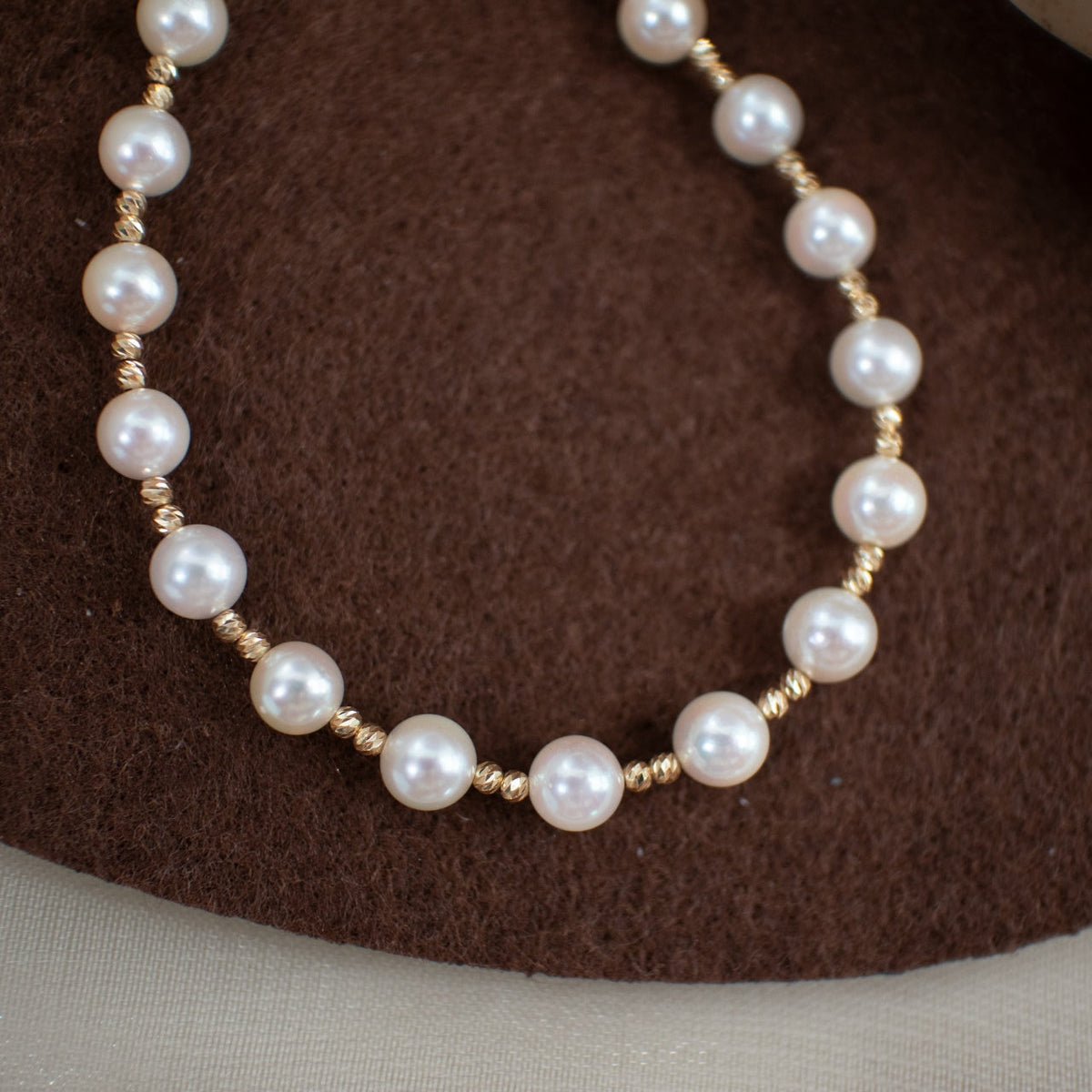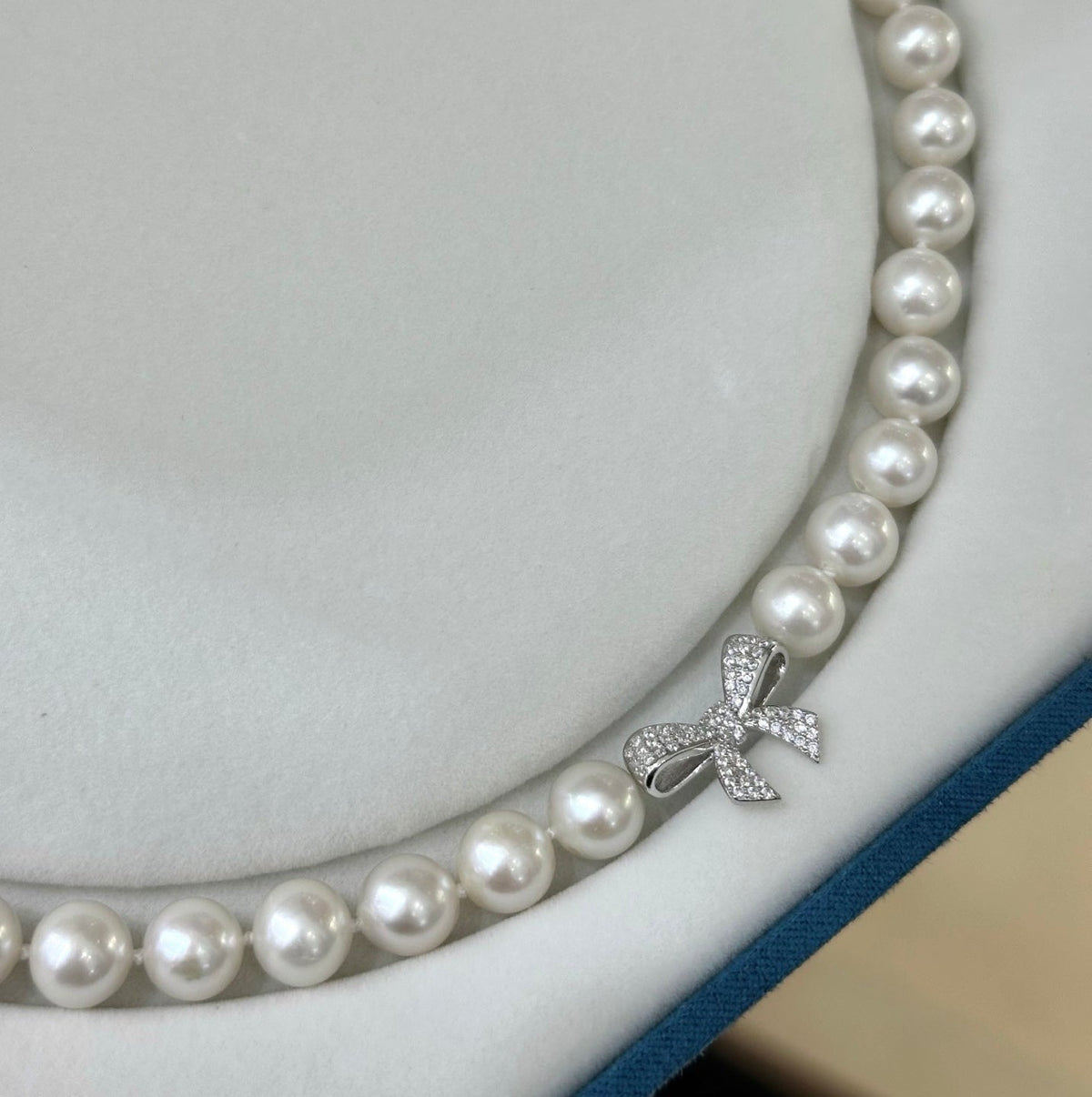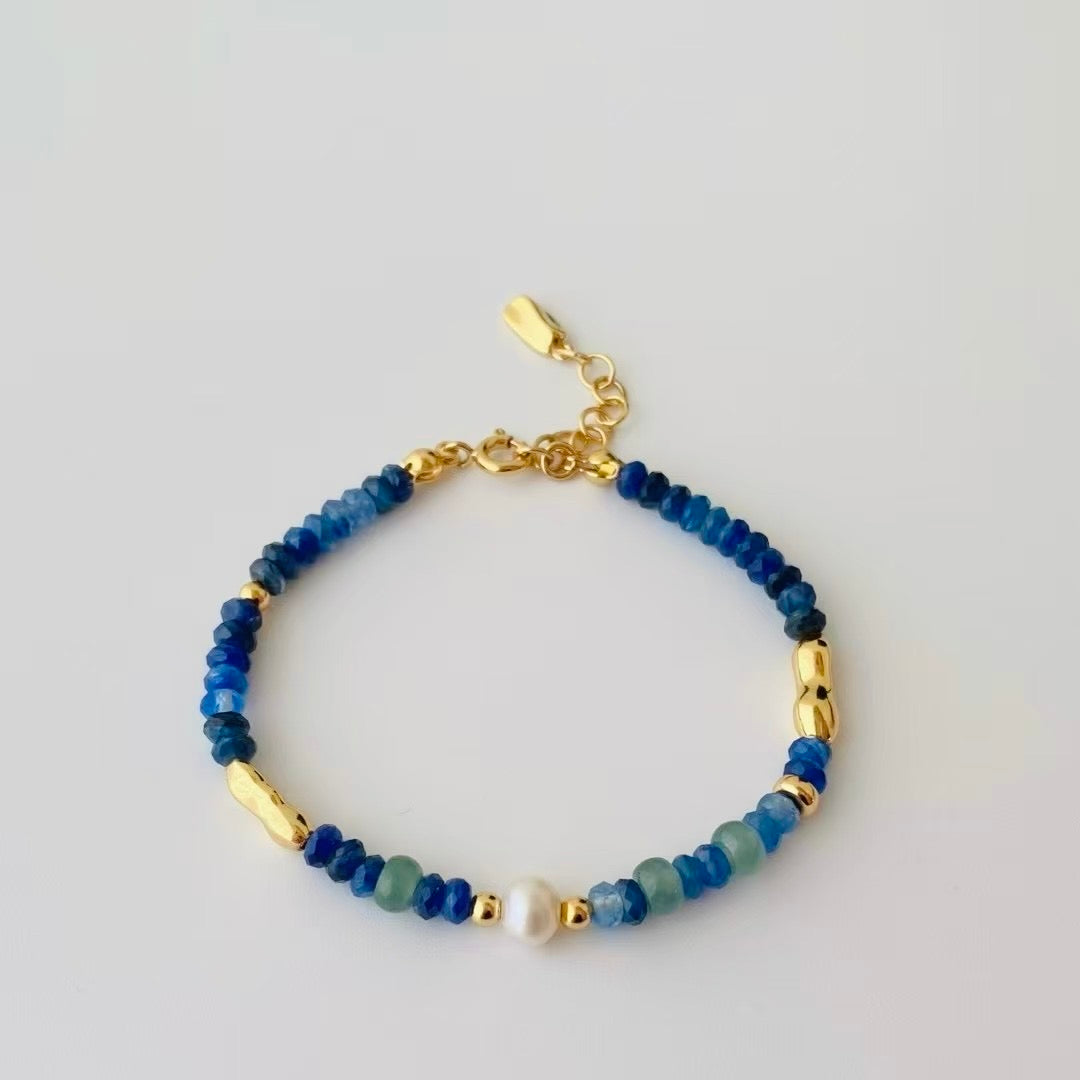
Can a pearl bracelet be worn together with hard objects?
Many people stack multiple bracelets on the same wrist without thinking twice, never stopping to consider how even casual daily contact with harder accessories can leave permanent marks on a pearl bracelet. Pearls rank far lower on the mineral hardness scale than most common jewelry materials, making them extremely vulnerable to damage from even light, repeated rubbing.
Immediate Surface Scratches and Abrasions
Even a few hours of wearing a pearl bracelet next to harder pieces on the same wrist will create tiny, invisible micro-scratches across the smooth nacre surface. These small marks add up over days and weeks of regular wear, slowly turning the once glossy, reflective finish dull and hazy. Hard materials like polished metal, faceted gemstones, and thick crystal edges catch on the soft outer layer of pearls with every small movement of your hand. A quick brush against a metal watch band while typing, or a light knock against a stone ring while reaching for a cup, can leave a deep, visible scratch that you cannot buff or polish away. Even seemingly smooth items like a thick leather bracelet with metal rivets, or a braided cord piece with hard agate beads, will rub fine lines across the pearl surface every time you move your arm. Over just a few months of daily stacked wear, the once soft, glowing luster of the pearls will fade into a flat, worn look that no gentle cleaning can restore.
Hidden Risks of Snags and Impact
Wearing a pearl bracelet alongside harder items on the same wrist creates constant unplanned contact that puts the whole piece at risk of breaking. Sharp edges on metal clasps, protruding gemstone settings, or chunky chain links can catch on the gaps between pearls with every twist of your wrist. A sudden, sharp tug to free a caught bracelet can snap the thin cord holding the pearls together in an instant, scattering small beads across the floor where they are easy to lose. Even without a full snap, repeated tugs will loosen the knots between each pearl over time, making individual beads slide freely along the cord and increasing the chance one will slip off unnoticed. Harder accessories can also deliver unexpected blunt force to the pearls during daily tasks. A quick knock against a desk edge while you are wearing multiple stacked pieces can chip the rounded edge of a pearl, leaving a jagged, uneven spot that ruins its smooth shape.
Simple, Low-Effort Wear Habits
The most straightforward rule is to wear your pearl bracelet alone on one wrist, with no other accessories stacked alongside it. This eliminates all accidental rubbing, knocking, and snagging before any damage can start to build up. If you prefer the look of multiple pieces, wear harder accessories on your opposite wrist, or wear them on your upper arm or ankle where they will never come into contact with the pearls. When you are getting dressed in the morning, put your pearl bracelet on last, after all your other accessories are already secured in place. This keeps you from accidentally knocking the pearls against harder pieces while you are still adjusting your other jewelry. At the end of the day, take a few extra seconds to store the pearl bracelet in a separate soft pouch or isolated compartment of your jewelry box, completely away from harder pieces that could scratch it while it sits in storage. This small, consistent habit will keep the pearls smooth, shiny, and free of permanent marks for years longer than mixing them with harder items every day.